

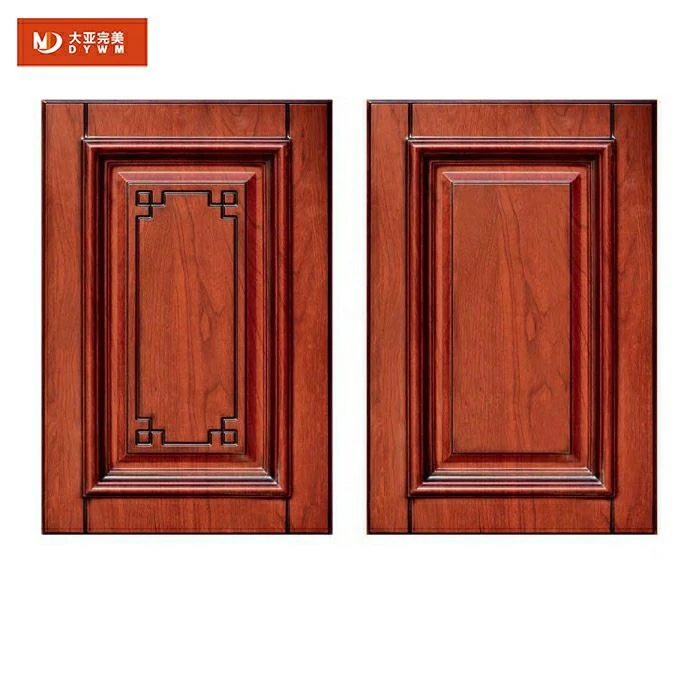

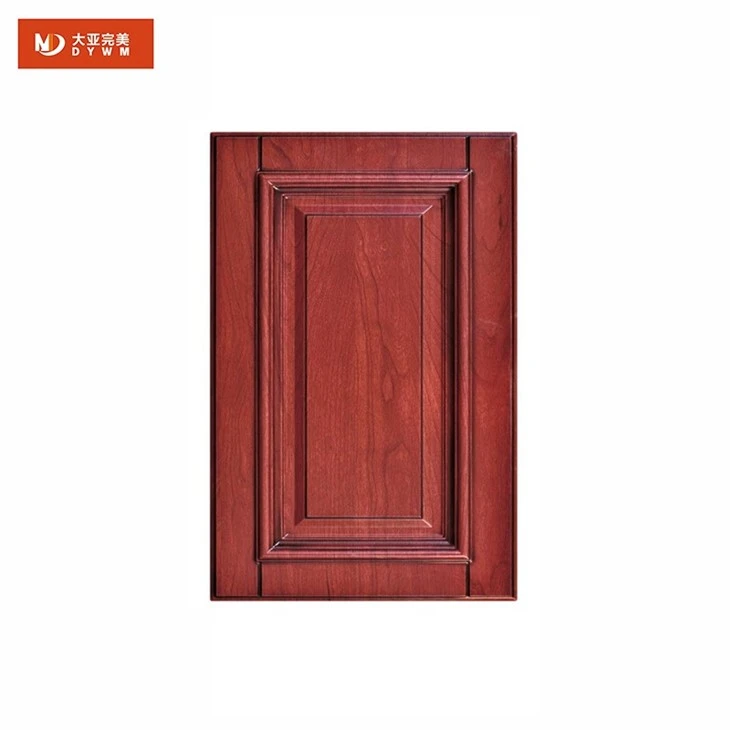
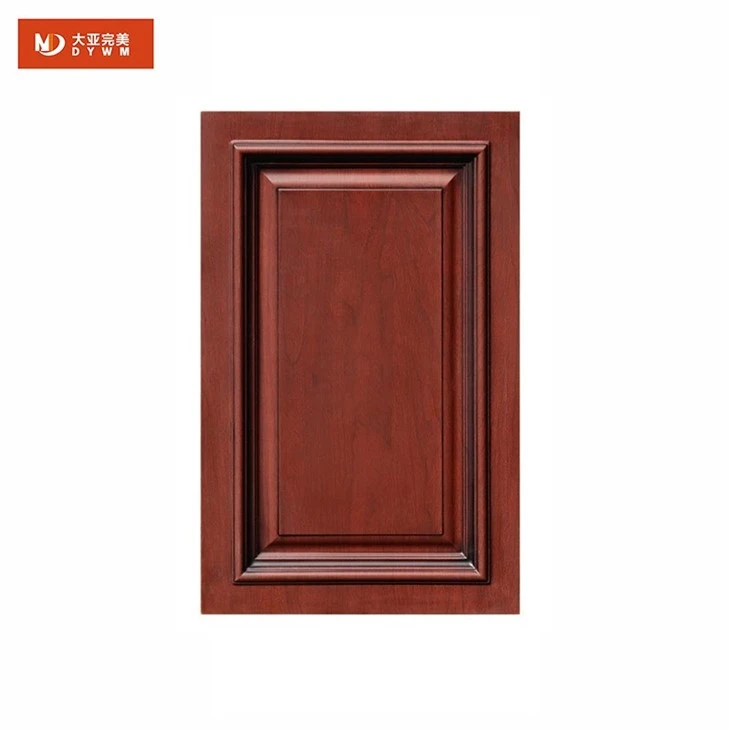
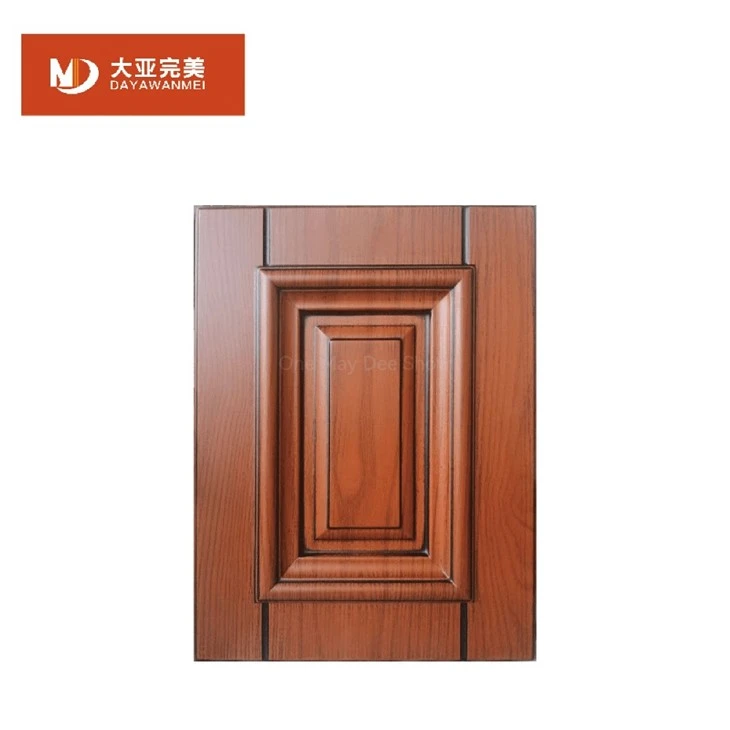
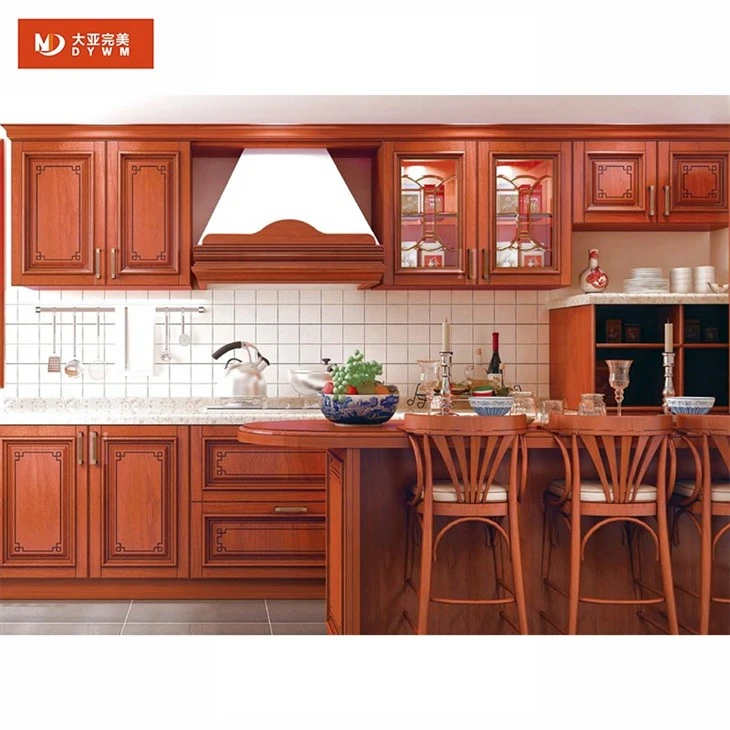
Vacuum Formed Kitchen Doors
Feature: Moisture-resistant, Waterproof,Warp-resistant
Application: Kitchen, Break Room, Tea Room, Pub
Opening Style: Swing or Flip-up
Brand Name: DYWM
Place of Origin: China
Main Material: Particle Board / HDF Board / Rubber Wood
MOQ: 30 Square Meters
Certificates: CE, COO
Warranty: 3 Years
Description
Technical Parameters
Introduction
"Vacuum formed kitchen doors" usually refer to vacuum-formed (PVC foil) cabinet doors. They use MDF (medium density fiberboard) as the base material, which is made from wood fibers and glue under heat and pressure. It has a stable structure and is easy to carve into shapes.
The surface is usually covered with PVC film (polyvinyl chloride), which is affordable and durable, available in both high-gloss and matte finishes. Higher-end versions may use PET film (polyethylene terephthalate), which is more eco-friendly, scratch-resistant, and has a better soft-touch feel. Through vacuum pressure, the flexible film is tightly attached to the carved base material, creating a seamless wrap. This is a common process for cabinet doors. "Vacuum forming" is not a separate material - it is a manufacturing method. The key points to check are the base material (we recommend E0 grade or higher MDF) and the thickness and quality of the PVC film (thicker film with seamless edges lasts longer). Avoid using these doors directly above stoves or in very humid or hot environments. So-called "solid wood vacuum doors" on the market still use MDF as the base; they only mimic wood grain on the surface and are not made of pure solid wood.
They are ideal for kitchens with light cooking smoke, no direct sunlight or extreme heat, where you want a good balance of cost-effectiveness and design (such as carved or raised-panel styles). If you need something more durable, you can choose solid wood with paint or stainless steel. Flat vacuum-formed doors are easier to clean and resist dirt better than those with complex carvings.
Flow Chart
Vacuum Formed Kitchen Cabinet Door Production Process:
First, according to the design drawing, we cut Shaker lines, raised panels and carved shapes on the base material. Using MDF's easy-to-cut feature, we then bond the finish film to the base material with vacuum pressure:
- Fix the carved base material in the vacuum forming machine, then heat and soften the PVC/PET film.
- Use vacuum pressure to evenly press the flexible film onto the base material, creating a seamless wrap over the door surface, edges and recessed lines.
- After cooling and setting, the film is fully bonded to the base material, forming an integrated vacuum-formed door panel.
Once wrapping is complete, we carry out detail work and quality checks:
- Trim and clean off extra film, check that edges have no bubbles or peeling.
- Apply moisture-proof edge sealing to the finished door to improve durability in humid kitchen environments.
- Finally, inspect the door's flatness, film adhesion and shape accuracy to ensure it meets production standards.
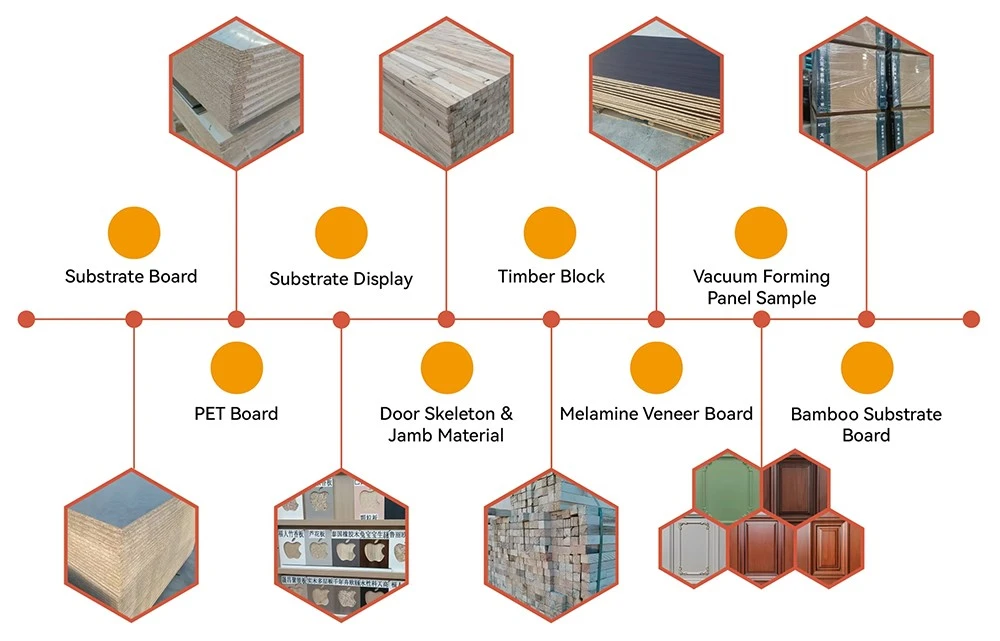
Applications
our cases
One May Dee Show Furniture Co., Ltd.
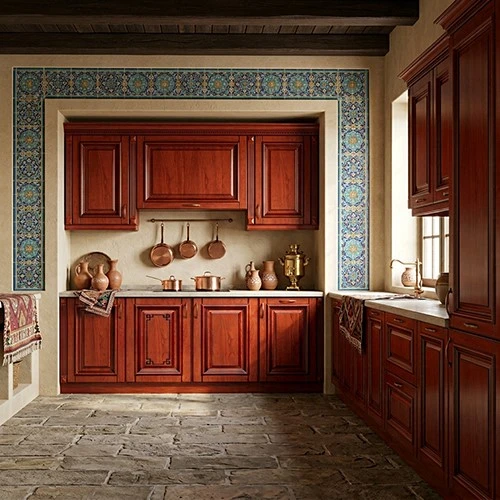
The kitchen uses vacuum-formed doors with a rich reddish-brown wood grain finish. Paired with Moroccan blue tiles, earthenware pots, copper cookware, and weathered stone floors, it creates a strong Persian vintage atmosphere. Compared with solid wood vintage doors, vacuum-formed doors cost much less. Yet they deliver nearly the same visual effect through wood-grain finishes, while avoiding the high maintenance costs of solid wood-such as cracking, warping, and the need for regular care.
For customers who love an exotic vintage look but have a limited budget, these vacuum formed kitchen doors are an excellent choice that balances style, texture, and practicality. They make it easy to create a nostalgic, story-filled vintage kitchen.
The vacuum forming process uses heat and pressure to apply PVC or PET film, which perfectly copies the warm texture and fine shine of reddish-brown solid wood. It gives you almost the same look and feel without the high cost and upkeep of real wood. The deep, rich red-brown tone of the vacuum formed kitchen doors pairs naturally with warm-toned aged walls and copperware. It brings a sense of timeless elegance to the vintage space, while the wood grain adds a cozy, lived-in feeling to the kitchen. This style works beautifully for Persian, tropical, and American vintage designs.
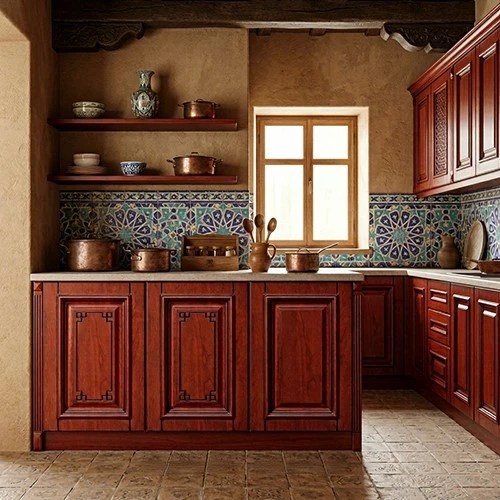
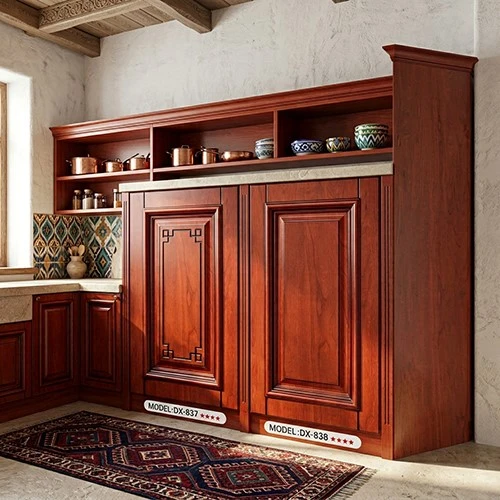
These vacuum formed kitchen doors come in both classic framed recessed panels and custom styles with traditional Chinese geometric patterns. Paired with textured aged walls, carved wooden beams, copper cookware, and exotic-pattern pottery, they create a rich vintage, exotic atmosphere.
They offer nearly the same visual quality as solid wood, without the high cost and maintenance. These are kitchen cabinet doors well worth choosing.
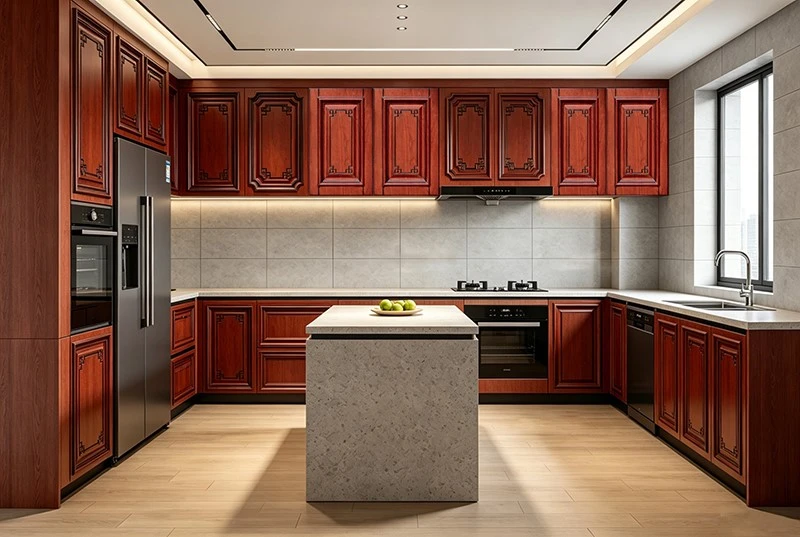
These are new Chinese-style vacuum formed kitchen doors with a reddish-brown wood grain finish. They create a kitchen space that blends Eastern charm with modern feel. Compared with traditional solid wood Chinese-style doors, vacuum-formed doors cost less and avoid the high maintenance costs of solid wood, such as cracking and warping. Even the carved lines at the corners are fully covered with no dead angles. The finished edges are clean, with no bubbles or peeling, and the fine details are just as good as solid wood. The door surface is dense and smooth. Oil stains and water marks can be wiped off easily, making daily cleaning very convenient. They fit many home styles, such as new Chinese and light luxury vintage, and we can also customize them to your preferred style.
Panel Samples
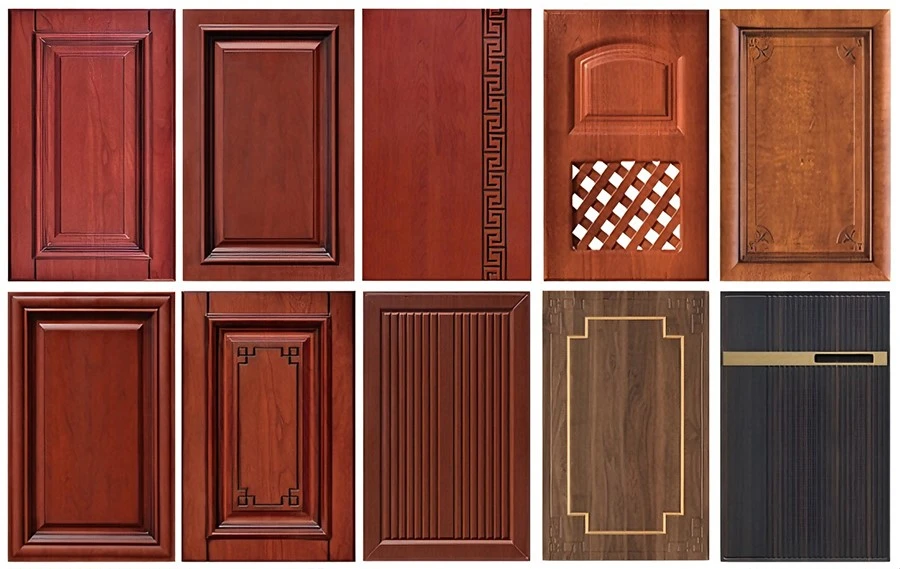
This set of samples fully shows the craftsmanship and style variety of our vacuum formed kitchen doors. Whether it's classic vintage, new Chinese, or modern luxury styles, they can be easily achieved through custom shapes and finishes.
From classic framed recessed panels (1st, 2nd, 6th styles), to new Chinese carved designs with traditional geometric patterns (3rd, 7th styles), to modern designs with fluted panels, lattice cutouts and metal inlays (8th, 9th, 10th styles), the vacuum forming process makes all complex shapes possible.
With reddish-brown, dark brown, walnut and other wood-grain finishes, they perfectly copy the warm texture and fine shine of real wood, creating a natural look for vintage, Chinese and American styles. We can also adjust door sizes to fit your cabinets. Feel free to contact us online for inquiries.
One May Dee Show Furniture is a professional integrated source factory for wooden doors, wall panels, and cabinets. If you have needs for Floating Cabinet, house doors, invisible doors, interior melamine doors, PVC doors, WPC doors, grille wall panels, wardrobes, or kitchen cabinets, please contact us.
Address: Laomiao Village, Dacheng Town, Sanyuan County, Xianyang City, Shaanxi Province, China.
Tel.: +86-13735815925
E-mail: trade@omdoor.com;
agent@omdoor.com
Hot Tags: vacuum formed kitchen doors, China vacuum formed kitchen doors manufacturers, suppliers, factory
Product Attributes
Product Name
| Vacuum Formed Kitchen Doors
|
Door Panel Material
| Particle Board / HDF Board / Rubber Wood
|
Finishing
| Pre-fininshed
|
Application
| Floor Cabinet, Overhead Cabinet, Wall Cupboard, Floating Cabinet
|
Veneer
| Melamine Paper/PVC Film
|
Design Style
| Modern/Minimalist/French/Italian
|
Type
| Slab/Raised-relief/Shaker
|
Thickness
| 18mm, 22mm
|
Size
| Customized Size
|
Colour
| Bionic Wood Grain, Solid Colour without Texture, Glossy or Customized
|
Package
| Soft Edge Protectors + Cushioning Foam + PE Bag + Carton+Pallet
|
Previous
Modern Wood Cabinet DoorsSend Inquiry


