

How to Choose Interior Doors? A Complete Guide to Solid Wood, Composite & Wood-Based Panel Doors
Jun 15, 2026
Leave a message
In the whole house renovation process, wooden doors are easily overlooked yet indispensable building materials. They not only serve basic functions such as space partition, sound insulation and dust prevention but also greatly affect the overall decoration aesthetic and living comfort. With years of experience in wooden door sales, I have witnessed numerous homeowners make regrettable mistakes. Some blindly pursue all-solid-wood doors and spend a fortune, only to encounter cracking and deformation problems later; others opt for ultra-low-cost inferior doors, suffering from excessive formaldehyde, door leaf deformation and surface peeling.
The core principle of door selection never lies in appearance, paint finish or sales pitches, but the internal structure. Per official industry classification, wooden doors are divided into three categories: Solid Wood Door, Solid Wood Composite Door, and Wood-based Panel Door. The structure directly determines a door's service life, environmental protection level, sound insulation performance and price. In this guide, I will break down all three types of doors with professional and easy-to-understand language, helping you pick the most suitable door within your budget.
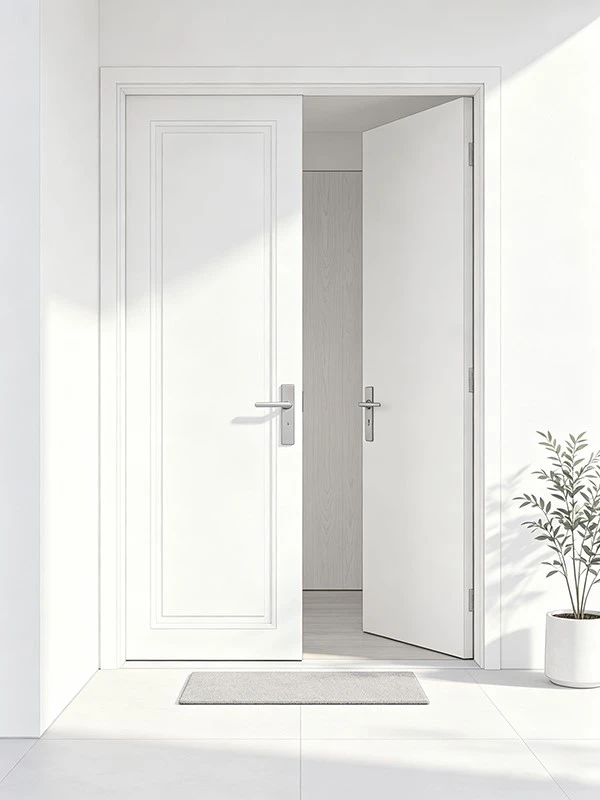
Solid Wood Door: Premium Choice for High-End Decoration
Many homeowners fail to distinguish ordinary solid wood doors from original solid wood doors. In the door industry, original solid wood doors represent the top-tier version of solid wood products with the simplest and most original structure. The entire door leaf, door frame and decorative lines are made of integrated natural logs without any artificial wood panels. Only auxiliary accessories like hardware and glue are non-wood materials. Common wood materials include oak, cherry, walnut, fir and teak wood.
Solid wood doors boast prominent advantages. Each piece of natural wood features unique grain and a warm, high-end texture, perfectly matching various decoration styles including light luxury, retro and minimalist. Dense natural wood delivers the best sound insulation among the three door types. High-quality solid wood doors only adopt eco-friendly glue at joint positions without extra panel additives, achieving an eco-friendliness level far above national standards. Additionally, solid wood features excellent corrosion resistance and impact resistance. With proper daily maintenance, the door can last for decades and even holds certain collection value.
Nevertheless, this type of door has obvious drawbacks. First of all, its high raw material and processing costs make it the most expensive option on the market. Moreover, natural wood is sensitive to ambient temperature and humidity. Poor manufacturing processes will easily lead to cracking, deformation and shrinkage, requiring manufacturers to master mature wood drying and conditioning technologies. Besides, solid wood doors are not suitable for complex molded designs. They are ideal for large-sized houses, high-budget users and people who pursue top-tier texture and environmental performance for long-term residence.
Solid Wood Composite Door: Cost-Performance King & Mainstream Household Option
As the most widely used door type in residential decoration, solid wood composite doors are my top recommendation for regular families, striking a perfect balance between texture, price and stability to fit 90% of domestic decoration demands. The door takes solid wood battens as the internal keel framework, filled with affordable woods such as fir and pine. The surface is covered with natural wood veneer, equipped with balance layers and eco-friendly paint, and pressed into shape under high pressure with professional adhesive.
Compared with pure solid wood doors, composite ones effectively solve the defect of easy deformation. The internal solid wood keel undergoes professional dehydration and conditioning treatment, which minimizes the impact of temperature and humidity and adapts to all regions across the country. The surface wood veneer restores real natural wood grain, whose appearance is almost indistinguishable from pure solid wood doors to the naked eye. Formaldehyde emission of qualified branded products is well controlled with E0-grade eco-friendly glue and panels.
Affordability is the biggest highlight of solid wood composite doors, whose price is only one-third to one-half of pure solid wood doors. Meanwhile, the material supports diverse designs including flat panels, carved patterns and line molding, compatible with minimalist, Chinese, European and other mainstream decoration styles. The only potential risk lies in low-quality products from small unqualified factories, which may use inferior filler and glue and cause formaldehyde overrun or hollow interior problems. This type of door is tailored for budget-conscious homeowners who demand balanced performance and appearance.
Wood-based Panel Door: Budget-Friendly Entry-Level Solution
Previously known as paint-free doors or ecological doors in the market, wood-based panel doors are entry-level products focusing on ultra-high cost performance, widely applied to rental housing, simple renovation and commercial projects. Different from the above two types, its interior is filled with artificial wood panels such as MDF, particle board and multi-layer boards, while the exterior is wrapped with PVC film or melamine veneer without wood veneer or paint spraying procedures.
Low cost is the core advantage of wood-based panel doors. Thanks to low production costs, they remain the most affordable option for basic decoration. The uniform artificial panel structure effectively prevents cracking; the paint-free design eliminates paint odor and allows immediate occupancy after installation with a shorter production cycle. In addition, the veneer comes in rich colors and patterns that can simulate wood grain, stone grain and solid colors to meet diverse aesthetic needs.
Correspondingly, it also has noticeable disadvantages. The surface veneer is vulnerable to sharp scratches and cannot be repaired once damaged. Its sound insulation effect is inferior to solid wood series doors, and the panel density varies greatly among different products. Cheap low-end versions usually adopt inferior particle boards and adhesive, resulting in higher formaldehyde release. Furthermore, the simulated grain veneer cannot compare with real wood in texture and grade, making it unsuitable for high-end residential decoration.
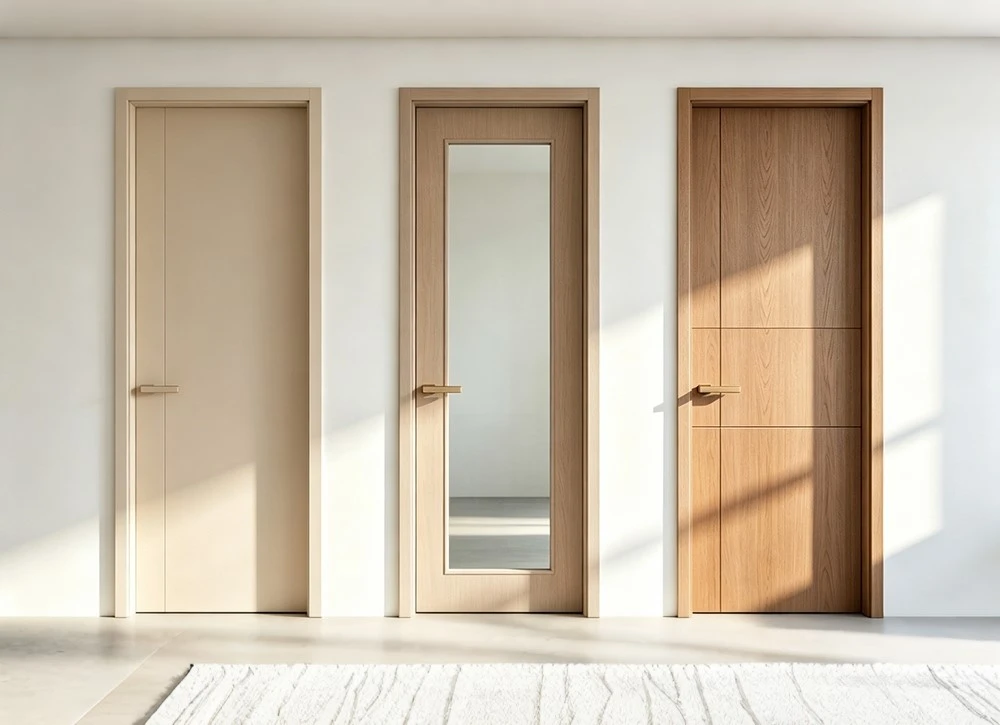
Professional Buying Advice & Practical Tips
Based on my years of sales experience, here is a straightforward purchasing guideline: Choose a Solid Wood Door if you have a sufficient budget, prioritize premium texture and environmental friendliness for long-term self-occupied upgraded housing; pick a Solid Wood Composite Door for regular family residences to balance appearance, stability and cost; select a Wood-based Panel Door for rental properties, short-term living spaces and commercial projects to control renovation costs.
Ultimately, there is no one-size-fits-all best wooden door-only the most suitable one for you. Learn about door internal structures, abandon the extreme mindsets of "only pure solid wood is good" and "prioritize the lowest price", and make decisions according to your budget, living scenario and decoration style. Only in this way can you select a satisfying wooden door and avoid common renovation pitfalls.