

How to Choose WPC Interior Doors for Residential and Commercial Projects
Oct 27, 2026
Leave a message

1. Assess Your Project Environment & Core Requirements
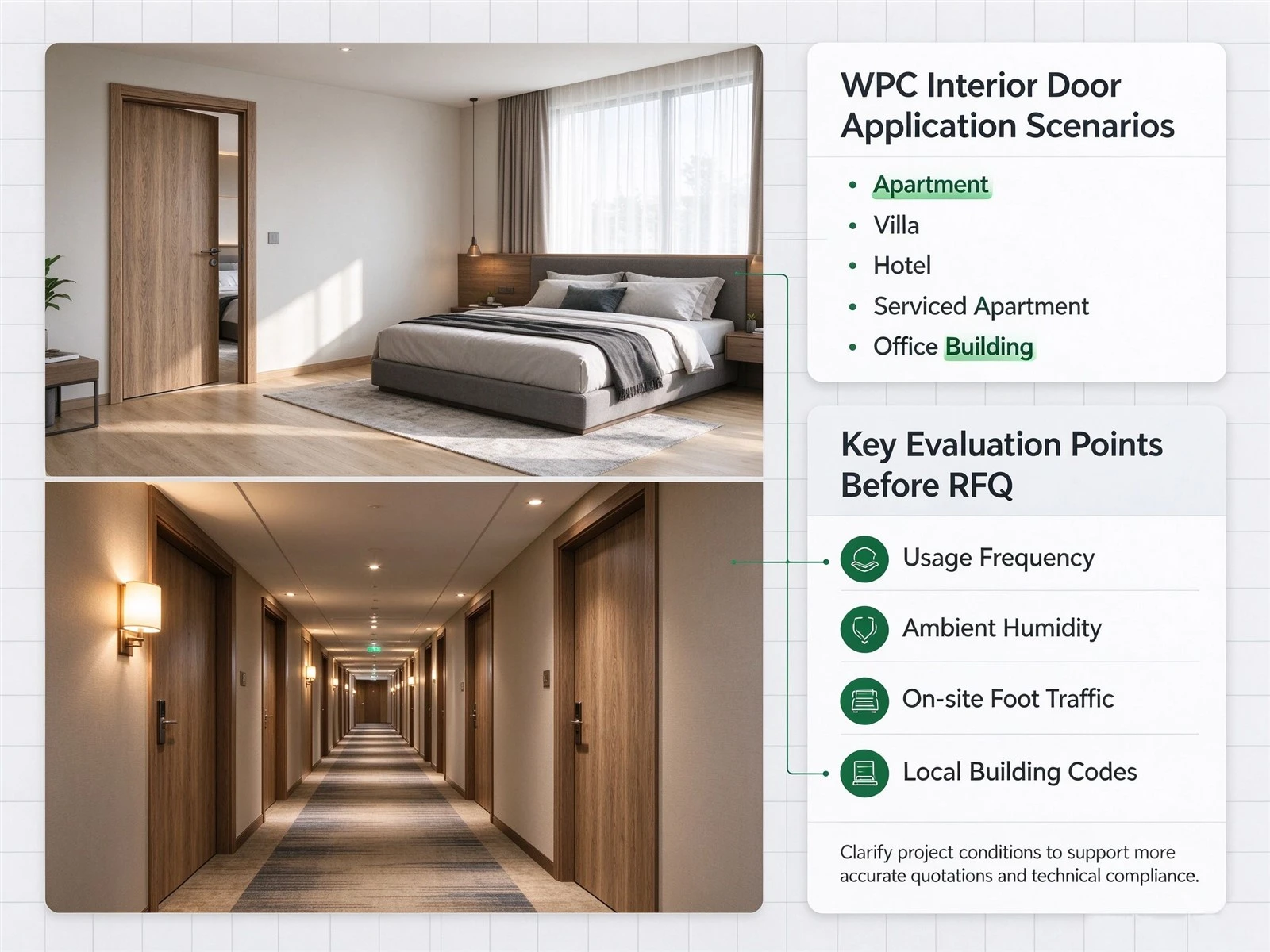
WPC interior doors are widely specified for apartments, villas, hotels, serviced apartments and office buildings. Before sending RFQs, buyers need to clarify usage frequency, ambient humidity, on-site foot traffic and local building codes.
Residential Project Priorities
Residential developments require consistent batch color, standardized dimensions, easy cleaning and low maintenance. Standardized door ranges simplify bulk procurement and later replacement.
Commercial Project Priorities
High-traffic commercial spaces demand higher durability, acoustic performance, fire safety compliance and reliable delivery scheduling. Confirm hardware grade and regulatory requirements before final specifications.
2. Check WPC Door Material Formula & Internal Structure
WPC interior doors from different manufacturers differ greatly in raw material formula and internal construction. The internal structure directly affects dimensional stability, anti-warping performance, and hardware load capacity. When evaluating suppliers, collect these technical details:
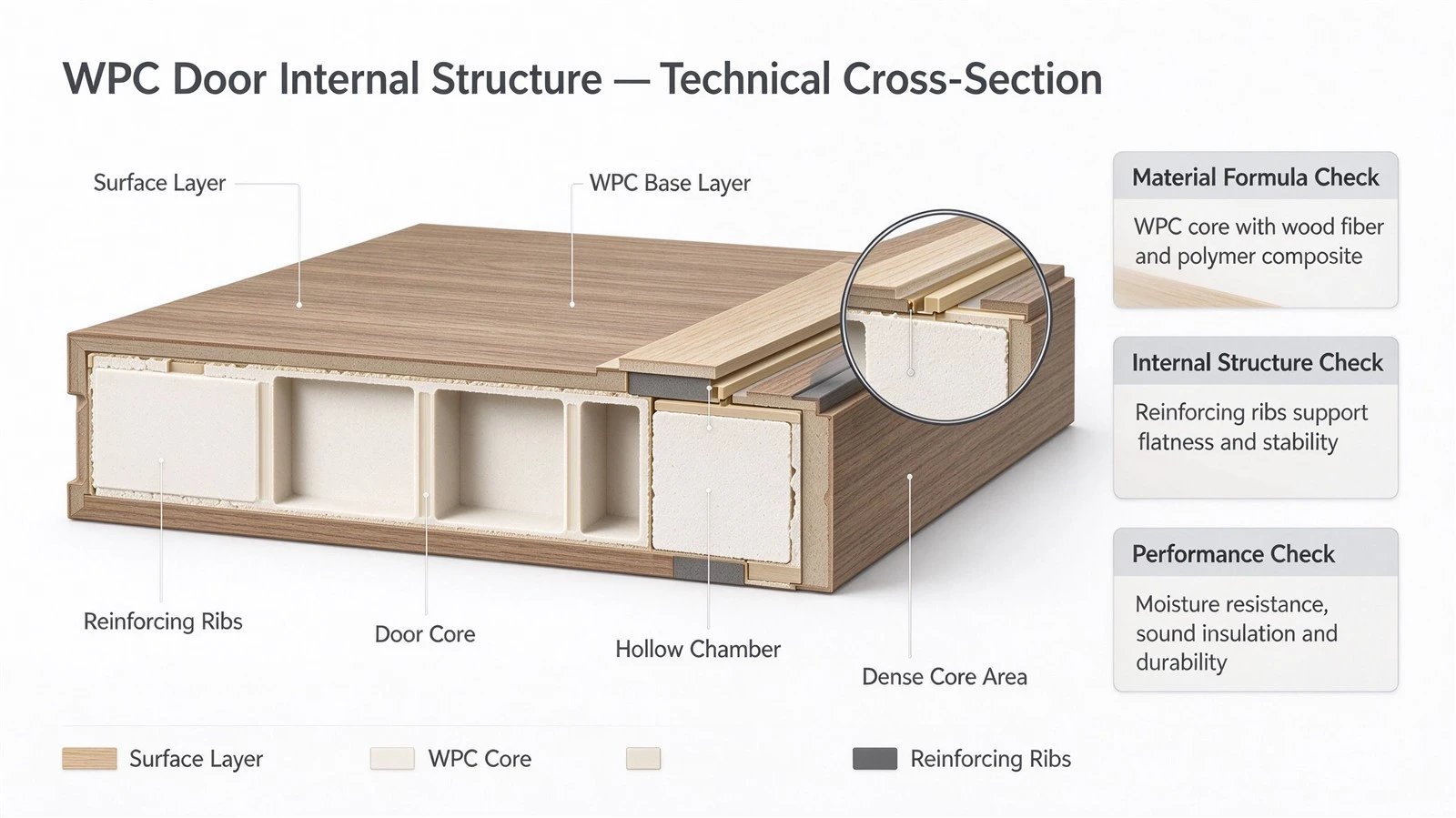
- Material composition and emission test reports
- Core type: solid reinforced or hollow engineered structure
- Door weight and local reinforcement for hinges & locks
- Moisture resistance and dimensional stability test data
Note: Light weight does not equal inferior quality. Always review structural strength together with installation conditions.
3. Confirm Technical Specifications & Door Schedule
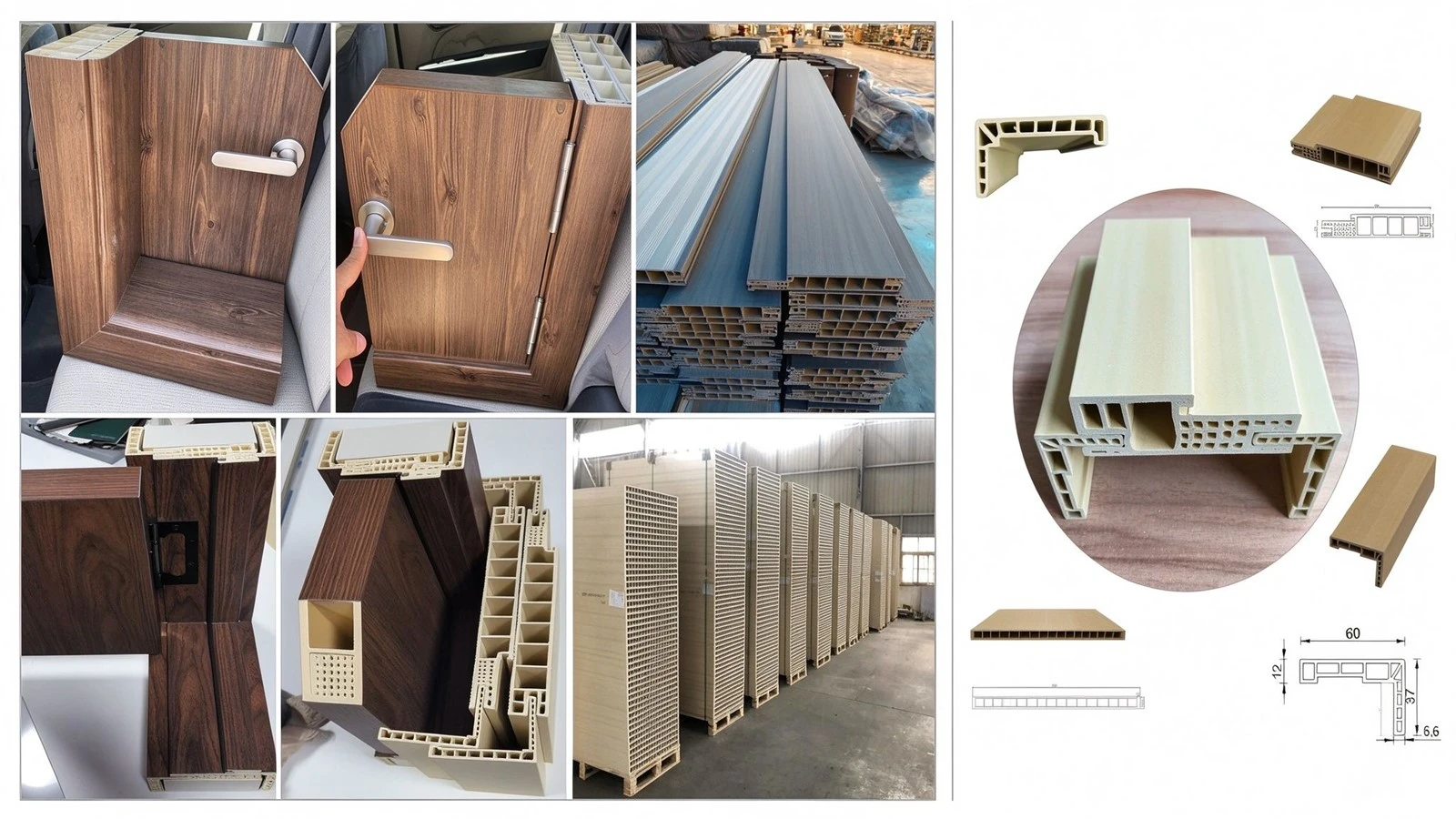
Inaccurate measurements will trigger installation delays, extra cutting costs, and inconsistent site finishes for bulk projects. Prepare a complete door schedule before requesting a quotation.
Key specifications to confirm:
- Door leaf width, height and thickness
- Wall thickness and matching frame/jamb system
- Swing direction: left-hand or right-hand
- Production tolerance standard
- Hardware, finish and color reference samples
4. Select Surface Finishes & Verify Batch Consistency
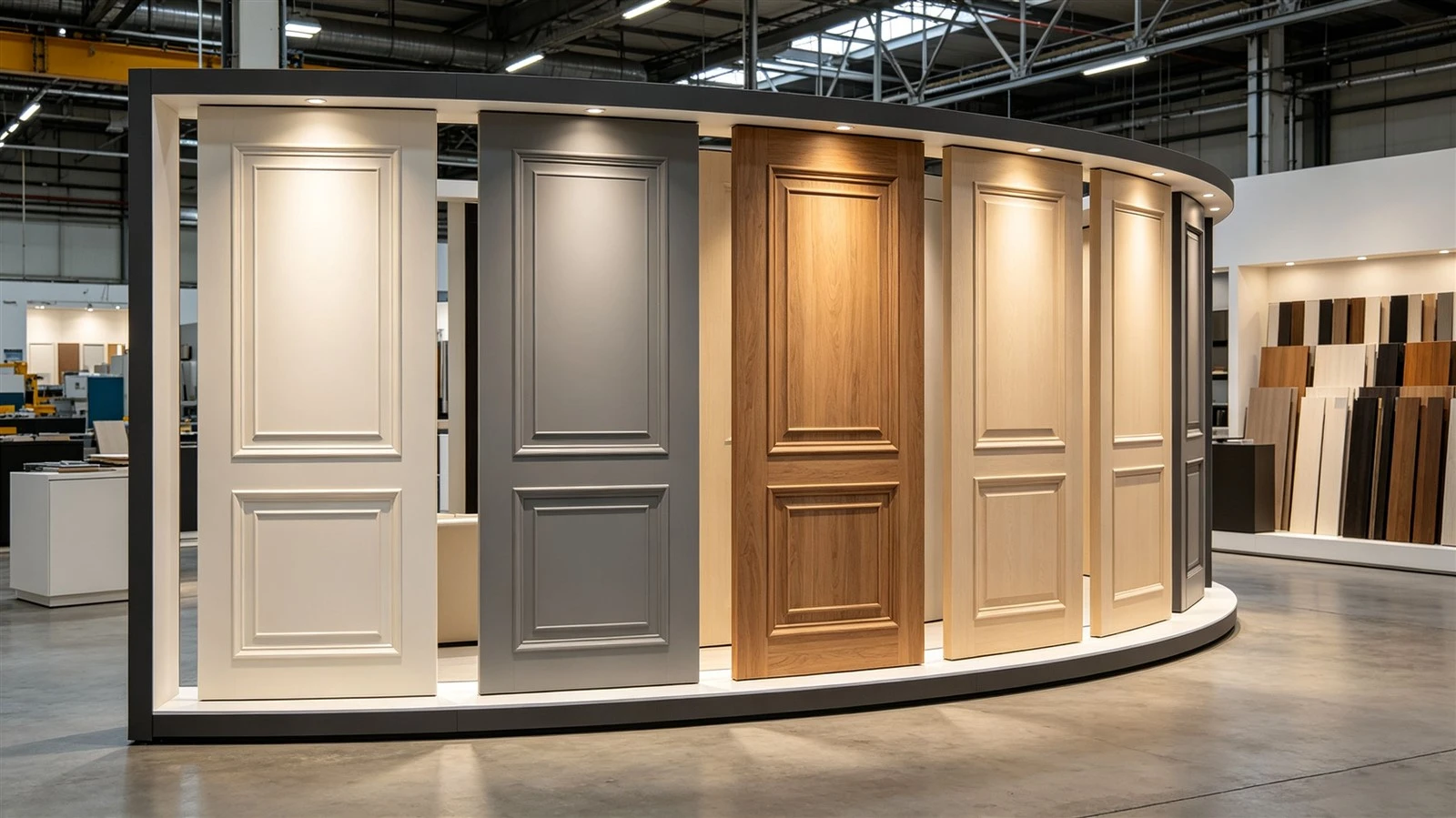
Surface finish controls scratch resistance, stain resistance, visual effect and maintenance workload. Common options include wood-grain decorative film, matte solid color and coated finishes.
Critical checks for finishes:
- Batch-to-batch color consistency
- Scratch and wear resistance
- Custom textures, colors and minimum order quantity
Tip: Approve physical samples before mass production. Digital images cannot reflect real gloss and texture.
5. Understand Moisture Resistance & Wet Area Limits
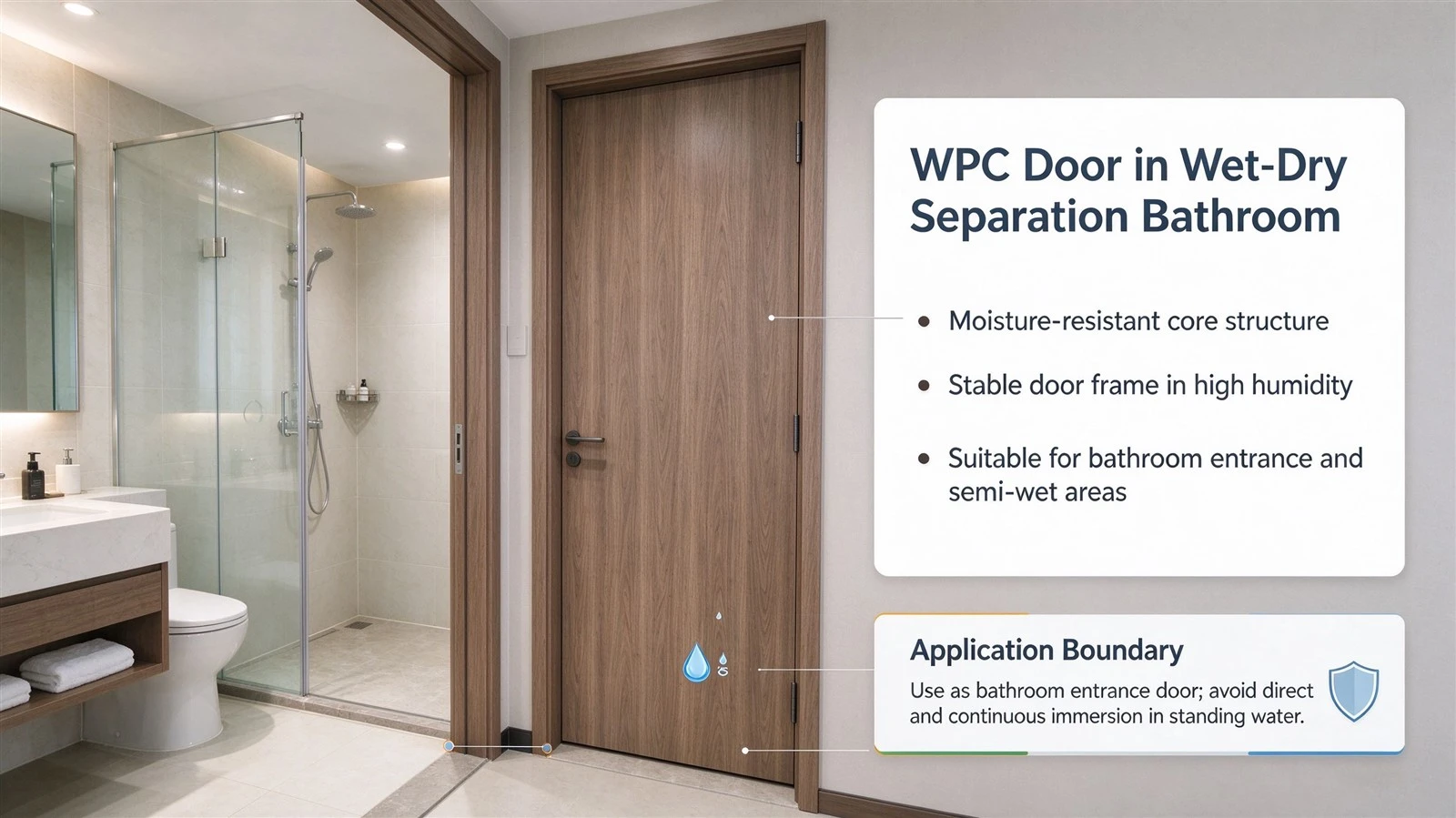
Moisture resistance is the core advantage of WPC doors, yet WPC is not fully waterproof. Edge sealing, joints, frames and hardware all influence long-term performance in humid environments.
Questions to ask your manufacturer:
- Available moisture performance test reports
- Edge sealing and joint protection solution
- Restrictions for continuous splashing zones
- Approved cleaning and maintenance guidelines
6. Match Door Frames, Seals and Hardware
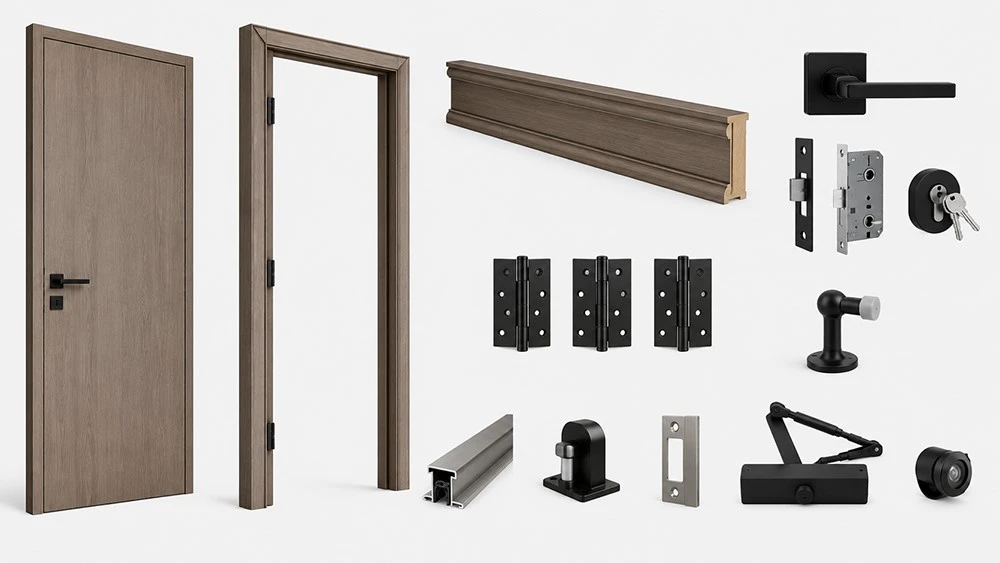
Focus on these items:
- Hinge quantity, load rating and reinforcement blocks
- Lock backset, spindle size and lock cutout preparation
- Frame material, fixing method and wall adaptability
- Sealing strips and door stop accessories
If you source local hardware, supply technical drawings to the factory in advance.
7. Verify Certifications & Factory Quality Control
Certifications
One May Dee Show Furniture Co., Ltd.
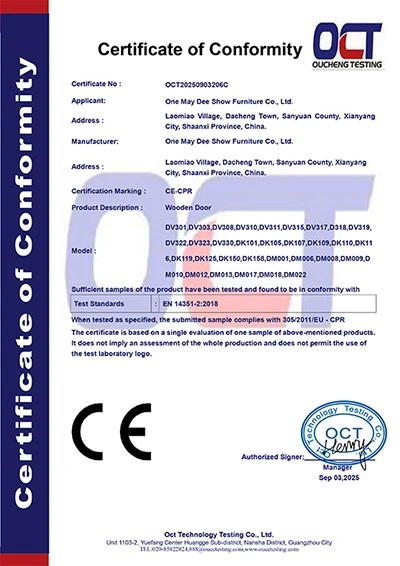
CE Certificate
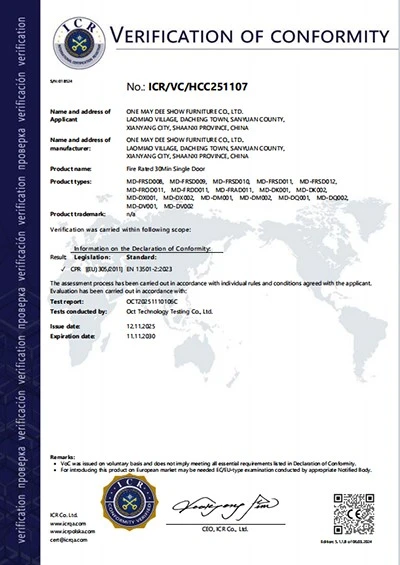
ICR Verification of Conformity
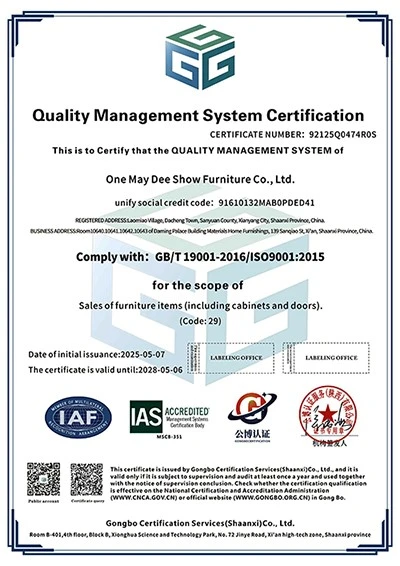
ISO9001 Certificate
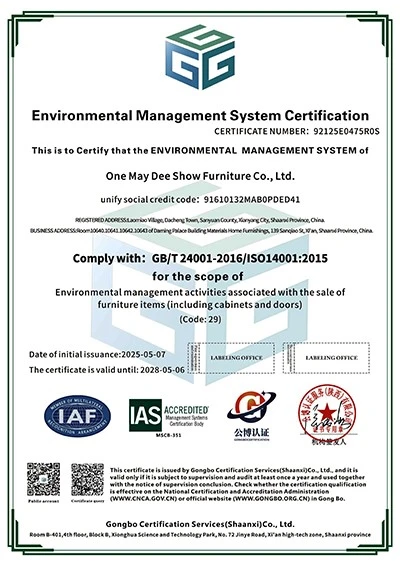
ISO14001 Certificate
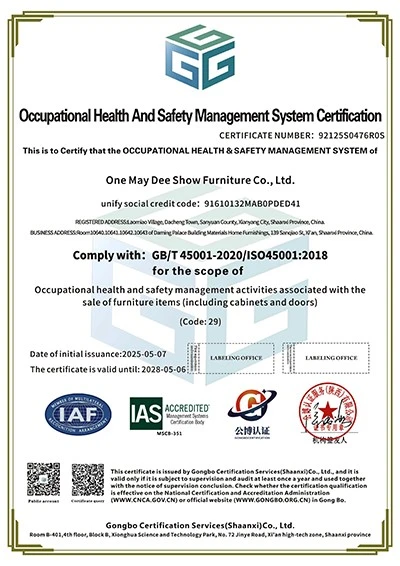
ISO45001 Certificate

Patent Certificate for Novelty of Anti-Collision Door
Do not rely on vague marketing claims. Request valid test certificates matching the exact product model you order. Common required documentation:
- Dimensional tolerance and surface inspection standards
- Emission certificates for indoor environmental safety
- Fire rating, sound insulation certificates (if required by local codes)
Important note: Ordinary WPC interior doors cannot automatically serve as fire-rated doors. Fire assemblies need dedicated certified configurations. DYWM can provide all the certifications related to WPC interior doors.
8. Evaluate Supplier Capacity & Total Procurement Cost
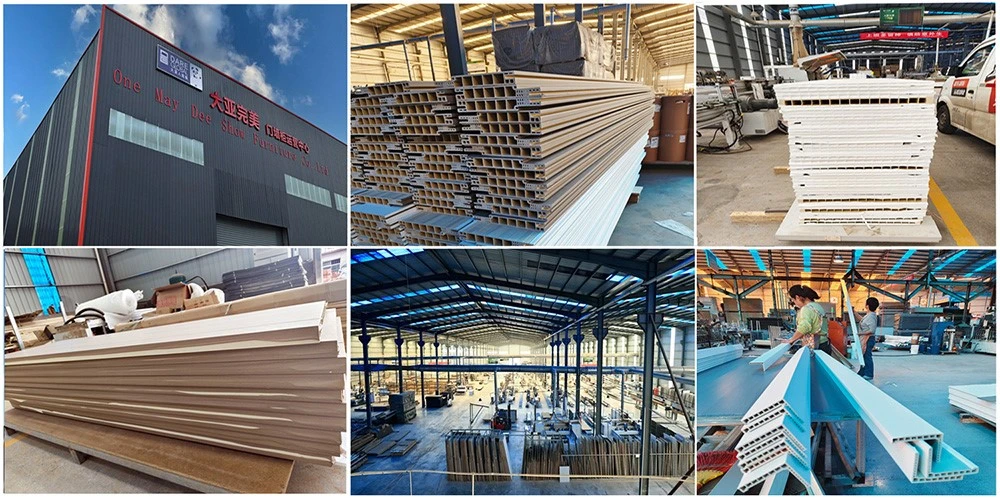
For importers, contractors and distributors, manufacturing capacity is as important as product quality. Meanwhile, compare full quotation scope instead of only unit price. Supplier evaluation points:
- Custom size, color and finish development capability
- Sample approval workflow and in-line QC process
- Export packaging, documents and shipping coordination. Cost items to calculate:
- Door leaf, frame and hardware set
- Sample fee, tooling charge and custom surcharge
- Packing, freight, import duty and after-sales risk. Lock samples, drawings and acceptance criteria before the bulk order.
Contact our team for custom sizes, wood grain / solid finishes, concealed frames, hardware options and bulk order pricing for your residential or commercial projects.
FAQ
Q: Are all WPC interior doors waterproof for bathroom use?
A: No. WPC material delivers superior moisture resistance, but it is not fully waterproof. The whole door set performance depends on edge sealing, joint treatment, frame and hardware protection. You must confirm the wet-area specification with the manufacturer before ordering for bathrooms.
Q: What is the difference between WPC doors and solid wood composite doors?
A: WPC doors adopt wood-plastic composite as core material, featuring low water absorption, less shrinkage and no cracking in humid environments. Solid wood composite doors use finger-jointed timber and veneer, with better natural wood texture but higher sensitivity to humidity fluctuations.
Q: Can WPC doors be made fire-rated and sound-insulated?
A: Standard WPC interior doors do not come with fire rating automatically. Fire-rated WPC doors require a dedicated certified door assembly with special core and hardware. Sound insulation relies on core filling, sealing strips and door tightness; you need to submit your STC requirement to the supplier for verification.
Q: Can I use my local hardware on your WPC doors?
A: Yes. We support pre-cutting for third-party hardware. You need to supply official technical drawings, backset, spindle size and load requirements at the RFQ stage. We will also add local reinforcement at hinge and lock positions accordingly.
Q: What is the typical MOQ for custom color and custom size WPC doors?
A: MOQ varies based on surface finish, custom mould and production schedule. Standard sizes and stock colors have low MOQ. Custom grain, unique solid colors and special concealed frame structures usually require higher minimum order quantity. We will clarify MOQ during RFQ.