

PVC Wooden Door Purchase Guide: Structural Factors, Quality Influencing Factors, Application Scenarios and Batch Purchasing
Oct 09, 2026
Leave a message

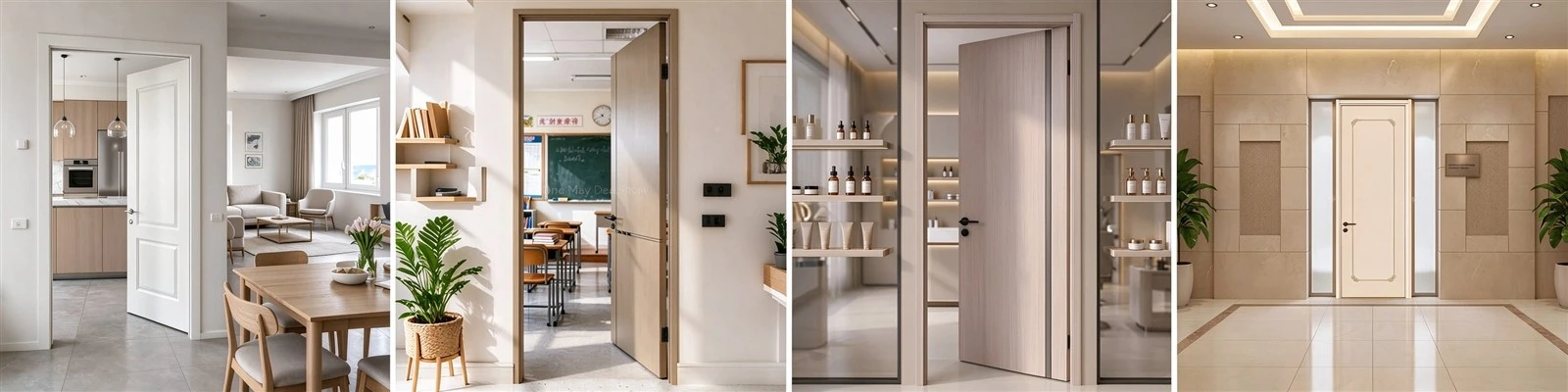
For hotel, residential, commercial buildings and building materials wholesale projects, the selection of interior doors should not only focus on appearance and unit price. The door structure, surface finishing process, door frame compatibility, size accuracy and production stability directly determine the implementation effect of the project, the maintenance cost in the future and the overall project cost.
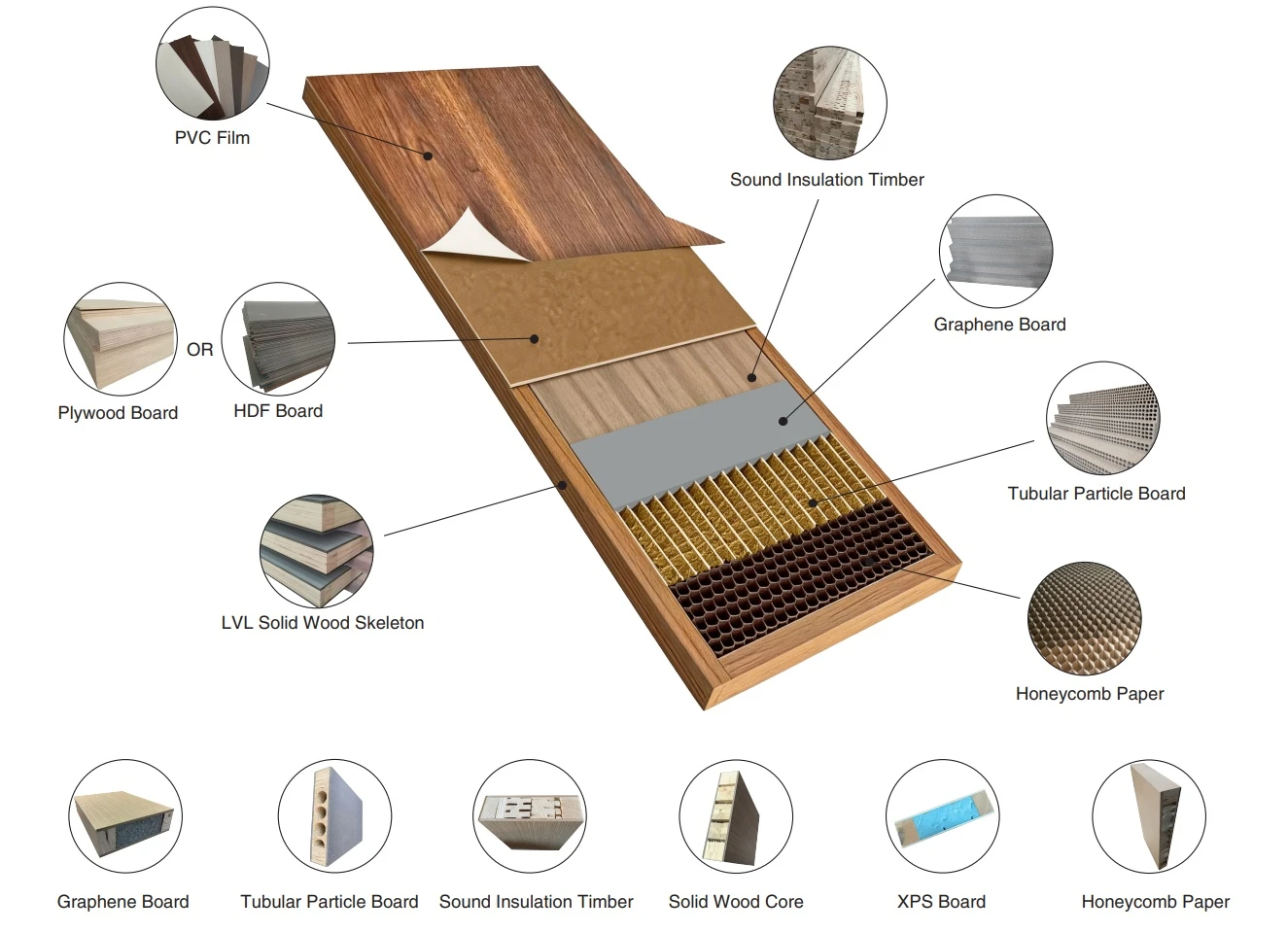
PVC wooden doors are not purely plastic doors. They are composite interior doors made of wooden base material with PVC coating on the surface. The common base materials include MDF, HDF and engineered wood frames, combined with different functional door cores. The B-end procurement focuses on verifying six core components to ensure a complete and matching set:
I. Core Basic Structure of PVC Wooden Doors
The core of PVC wooden doors is the structural base material + PVC decorative finish, and they are not made of all-plastic materials. The base material mostly uses MDF, HDF, engineered wood, and solid wood frames, combined with different functional door cores. For B-end procurement, it is necessary to carefully check the six core components to ensure the compatibility of the entire set.
When purchasing a batch of complete sets of doors, it is necessary to confirm that the dimensions of the door panels and door frames, the opening direction, the position of the hinges, the holes for hardware installation, and the structural parameters are all perfectly matched to avoid installation compatibility issues on site.
- Door Shutter / Door Leaf: The main movable part of the door, including dimensions, thickness, internal structure and surface finish.
- PVC Film: The decorative layer that determines the wood grain pattern, color, texture and surface appearance.
- Core Material: The internal structure that affects the weight, rigidity and other performance of the door body.
- Door Frame: The peripheral frame that supports the door shutter and affects the installation fit.
- Edge Finishing: The process used to protect the edge of the door body and improve the durability of the finished product.
- Hardware: Includes hinges, door locks and other accessories required for installation and use.
II. Three Key Standards Affecting Quality
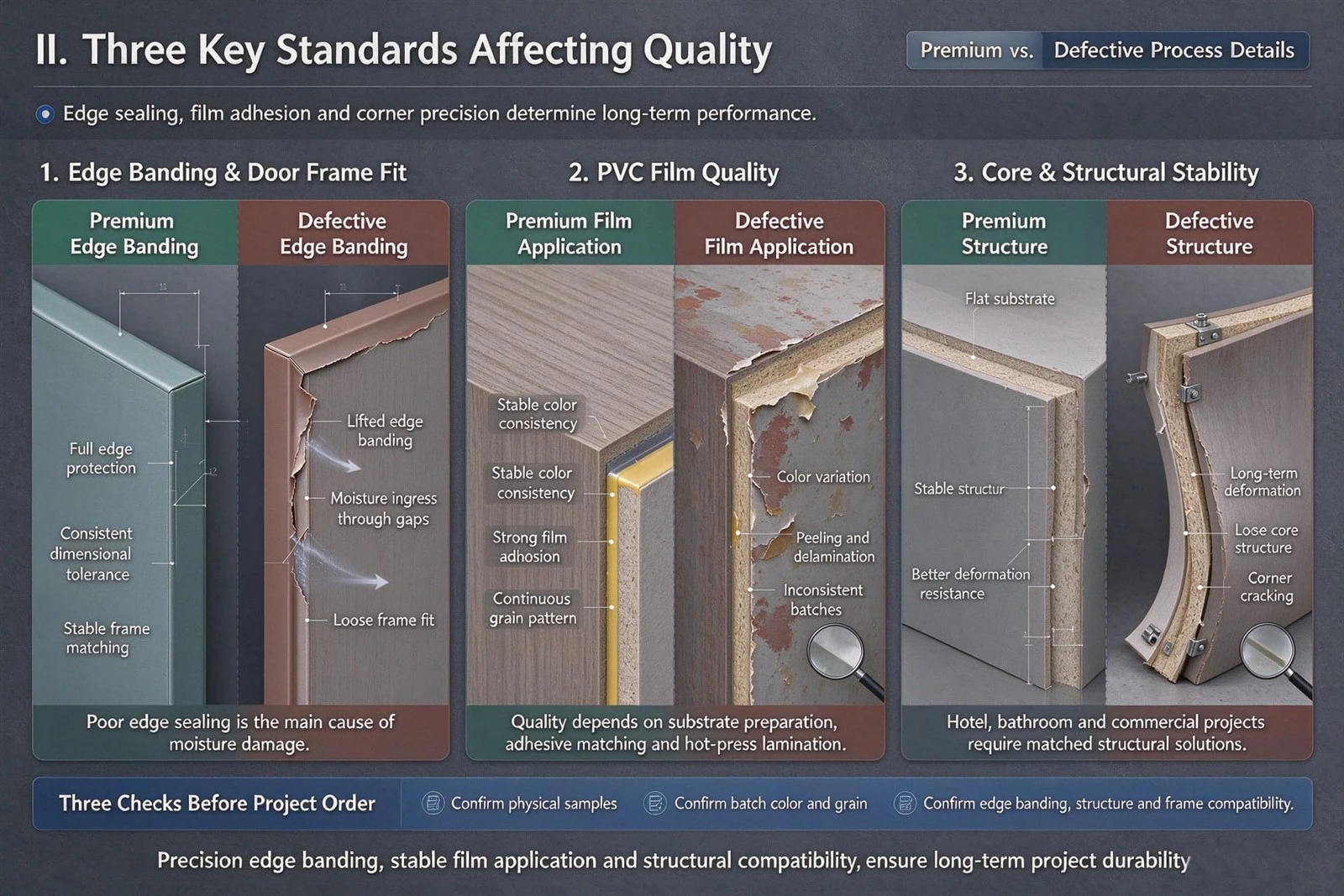
1. PVC Coating Quality
Appearance color difference, peeling, and delamination are the most common problems in engineering projects. High-quality production relies on substrate treatment, compatible glue, and a high-temperature coating process, rather than just membrane thickness. Before placing large orders, it is essential to confirm the physical sample to ensure consistent color and texture across batches.
2. Door Core and Structural Stability
High-density boards are suitable for flat coating; solid wood filling and composite honeycomb cores can meet the requirements of sound insulation, lightweight, and resistance to deformation. For hotel, bathroom, and commercial scenarios, corresponding structural solutions need to be matched to prevent deformation and loosening over the long term.
3. Edge Sealing and Door Frame Compatibility
Poor edge sealing is the main cause of moisture damage. Reliable factories have the ability to perform precise edge sealing, maintain uniform size tolerances, and ensure a stable door frame matching process, which is the core guarantee for the long-term durability of the project.
III. Core Engineering Application Scenarios
1. Hotel Room Door
Advantages: Uniform appearance, easy maintenance, stable opening and closing. Key procurement points: Wear-resistant finish, reinforced structure, precise hardware drilling, basic sound insulation, batch consistency. Special fireproof and soundproof projects can provide corresponding qualification documents.
2. Bathroom Moisture-proof Door
PVC finish can effectively isolate surface moisture. Combined with complete waterproof sealing edges and a moisture-proof door core, it can be adapted to the dry and wet areas of bathrooms. Purely relying on the finish cannot completely prevent water leakage. In humid scenarios, the overall moisture-proof structure must be upgraded.
3. Residential and Commercial Engineering Doors
Suitable for apartments, office buildings, and batch-sized building renovations. Key procurement points for engineering: Precise dimensions, unified finish of the entire project, complete supply, stable production capacity, export-level packaging and standardized quality inspection.
IV. PVC Doors vs. Melamine Doors vs. Painted Doors
The three mainstream interior doors each have their own applicable scenarios. For B2B comparisons, the structure, thickness, and hardware configuration must be standardized to avoid false low prices.
| Project | PVC wooden door | The melamine door | Painted door |
| Finishing characteristics | PVC film, no paint required, scratch-resistant and easy to clean | Sheet material pressed finish, highly wear-resistant | Sprayed paint surface with high-quality texture |
| Moisture-proofing capability | Excellent (suitable for humid areas) | Medium | Generally |
| Engineering adaptation | Batch projects, hotels, apartments | Workwear, office wear, long-lasting durable scenarios | High-end home decoration and customization projects |
| Cost | High cost-effectiveness, suitable for large-scale production | Medium | High maintenance costs |
V. Factory OEM/ODM Customization Capability
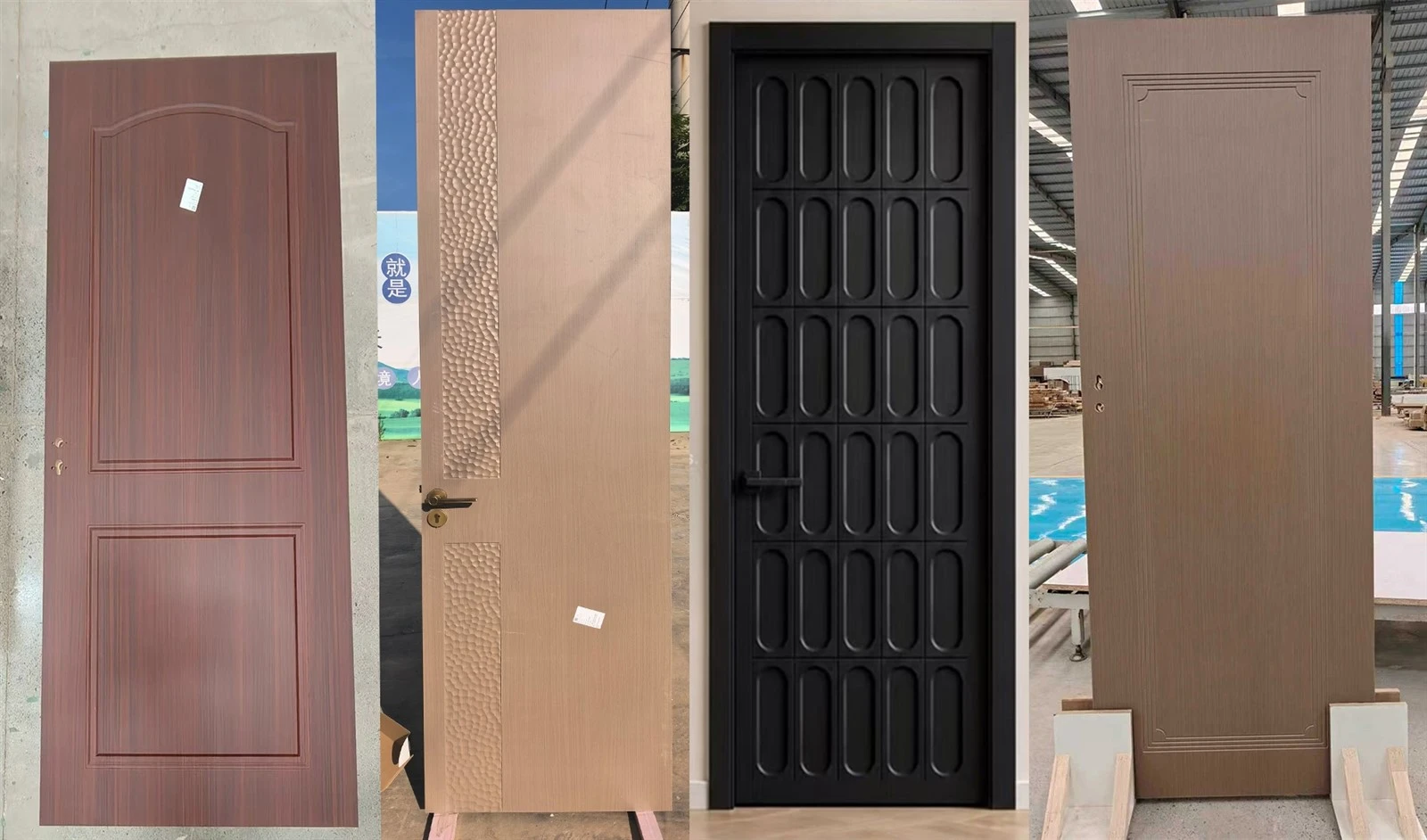
As a PVC interior door manufacturer, the source factory supports full project customization of interior wooden doors, meeting the needs of wholesalers, brand owners, and engineering parties: door panel size and thickness, wood grain/or plain color finish, door core structure, hardware holes, LOGO, packaging branding, complete door frame set. Customized orders can provide drawing coordination, sample confirmation, and stable batch delivery. Before placing an order, clearly define the supply scope: single door panel or complete door frame set including hardware.
VI. How to Select Reliable PVC Wood Door Factories
1. Qualifications and Parameters: Provide complete specification parameters, quality inspection reports, CE&ISO certifications, and tolerance standards.
2. Quality Control Strength: Raw material screening, coating quality control, size calibration, factory full inspection, ensuring batch consistency.
3. Delivery Guarantee: Export-level packaging, anti-damage logistics, stable delivery time, complete after-sales service.
VII. Core Factors of PVC Wood Door Prices
The price is determined by the comprehensive configuration: base material and door core grade, PVC film material, customized size, edge sealing process, door frame set, hardware configuration, order quantity and OEM customization requirements. For B-end procurement, it is recommended to compare prices based on the complete door frame set, not comparing the unit price of the door panel alone.
VIII. Checklist for Batch Purchases
Order confirmation: Verify item by item: size, thickness, door core structure, sample finish, door frame fit, opening direction, hardware configuration, customization requirements, quality inspection standards, packaging, delivery time and after-sales warranty.
Conclusion
High-quality PVC wooden door project procurement. The key factors to consider are structural stability, surface treatment technology, batch consistency and factory delivery capability. OM Door offers standardized and customized PVC wooden doors, as well as complete door frame project solutions. It also supports OEM/ODM export customization. If you need project quotations and technical plans, please feel free to contact us at any time.