
How to Check the Quality of PVC Raised Cabinet Doors Before Shipment
Nov 16, 2026
Leave a message

If you source PVC raised cabinet doors for cabinet projects, residential renovation, or wholesale distribution, final pre-shipment inspection is the last critical line of defence against costly claims, site rework, and customer complaints. Unlike flat PVC cabinet doors, raised panel profiles rely on vacuum membrane pressing to pull PVC foil tightly into routed grooves, curved corners, and moulded recesses. This extra profile detail creates more hidden failure points that standard visual checks often miss. This guide is written for importers, purchasing managers, and third-party QC inspectors, with a step-by-step PVC door quality inspection workflow you can bring directly to the factory floor.
What Are PVC Raised Panel Doors?

PVC raised panel doors are thermofoil cabinet doors built from an MDF core, CNC-routed into raised and recessed moulded profiles, then covered with decorative PVC film through vacuum membrane pressing. The heat and pressure wrap the PVC foil seamlessly over every curve, groove, and corner of the carved panel, creating a continuous decorative surface without separate edge banding. Wood grain, solid matte, high-gloss, and textured finishes are all common options.
This construction differentiates them from melamine flat panels or painted doors. The quality of the PVC film bond, especially deep inside panel grooves, defines the long-term reliability of the finished door. Many surface defects in PVC raised panel doors only appear in these hard-to-reach profile areas, not on the flat central face.
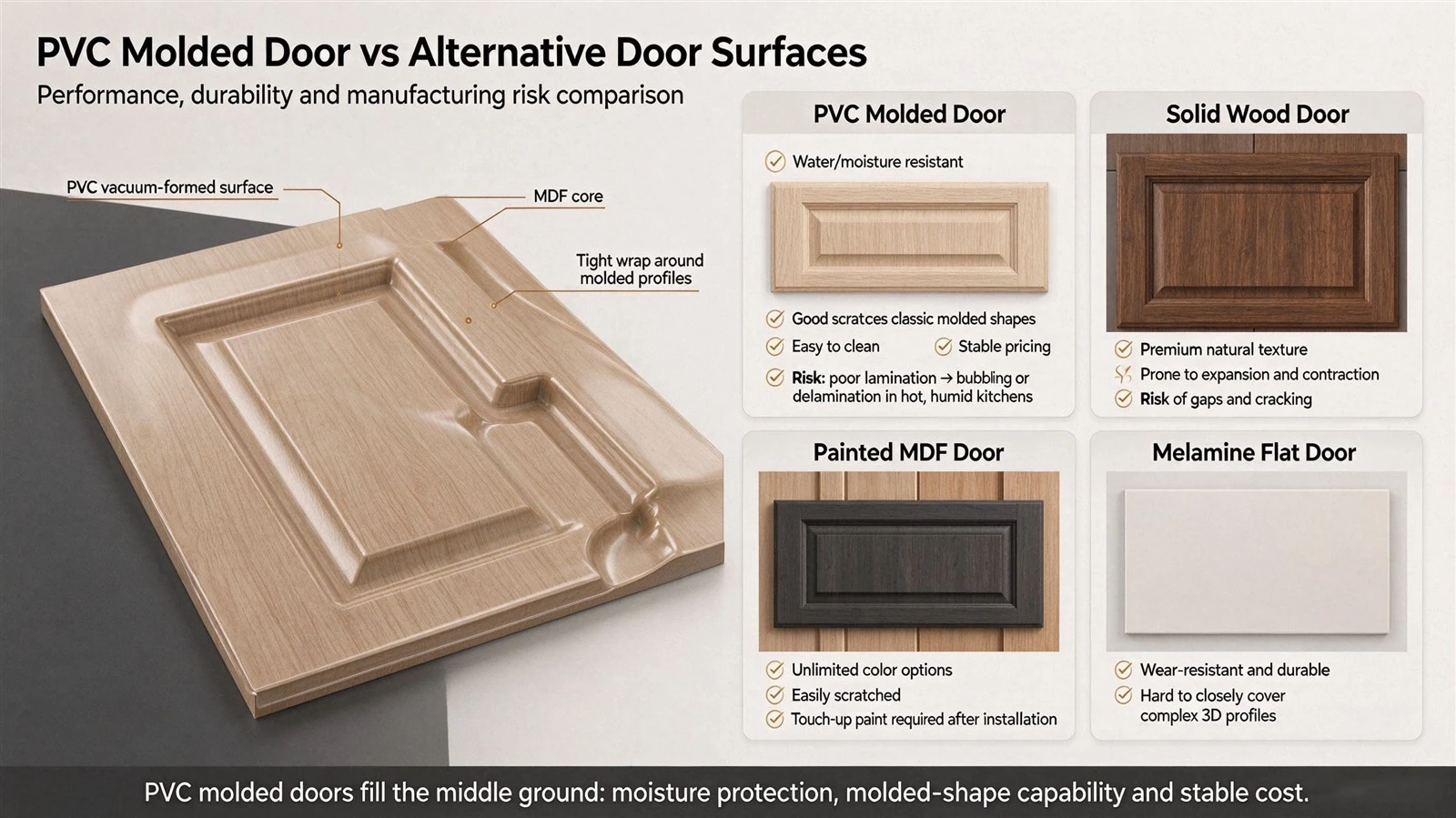
PVC Convex Mold Door Panels Compared to Other Kitchen Cabinet Door Panels
Before officially starting the quality inspection, it is necessary to clarify the product characteristics to facilitate the unified acceptance standards between you and the factory.
Solid wood convex mold door panels have a high-quality texture, but they are highly susceptible to expansion and deformation due to temperature and humidity changes, resulting in gaps and cracks. The painted density board door panels offer a wide range of color options, but the paint surface is prone to scratches and requires repainting after installation. The triaminic board is durable and wear-resistant, but it is difficult to closely cover complex concave and convex shapes.
PVC convex mold door panels precisely fill this middle range: The vacuum-formed PVC surface isolates moisture, protects the internal MDF substrate, is resistant to minor scratches, is simple to clean with daily wiping, and can replicate classic convex mold designs. The price stability is better. The biggest risk in procurement is that the coating process is not up to standard, and the coating film cannot adhere to the milled contour, causing bubbles and delamination in the kitchen environment with high humidity and temperature in the future.
Core Advantages of Qualified PVC Raised Panel Doors
The PVC convex mold door panels with a stable process are friendly for both distribution and engineering projects. The sealed PVC surface layer has good moisture-proof properties and is suitable for use in kitchens and laundry cabinets. The surface maintenance is simple; handprints and water stains can be wiped clean with a damp cloth, and no special cleaning agents are required. The concave-convex design has a classic style and is suitable for traditional, transitional, and country-style cabinets.
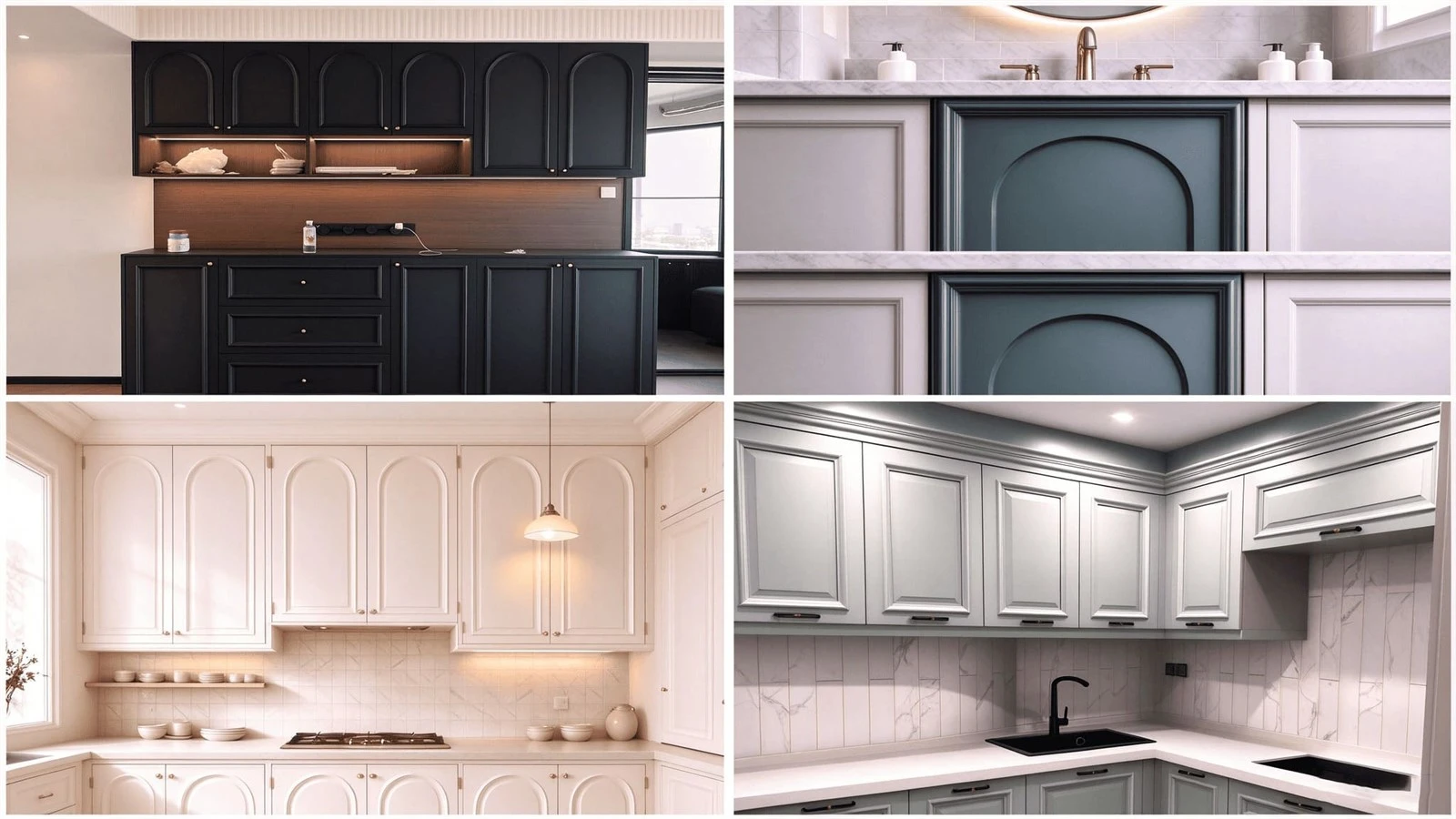
As long as the factory selects stable E1-grade MDF base material and the vacuum molding parameters are calibrated accurately, the color and gloss of the entire batch of door panels can be kept uniform, the door panels have good flatness, and the deformation risk is low. However, these advantages will only hold if pre-inspection and quality control are carried out before shipment to detect issues such as false adhesion of the film, size deviations, and appearance defects, so as to avoid problems being exposed only after the cabinets are installed.
Pre-Inspection Preparation: Set Your Standard First
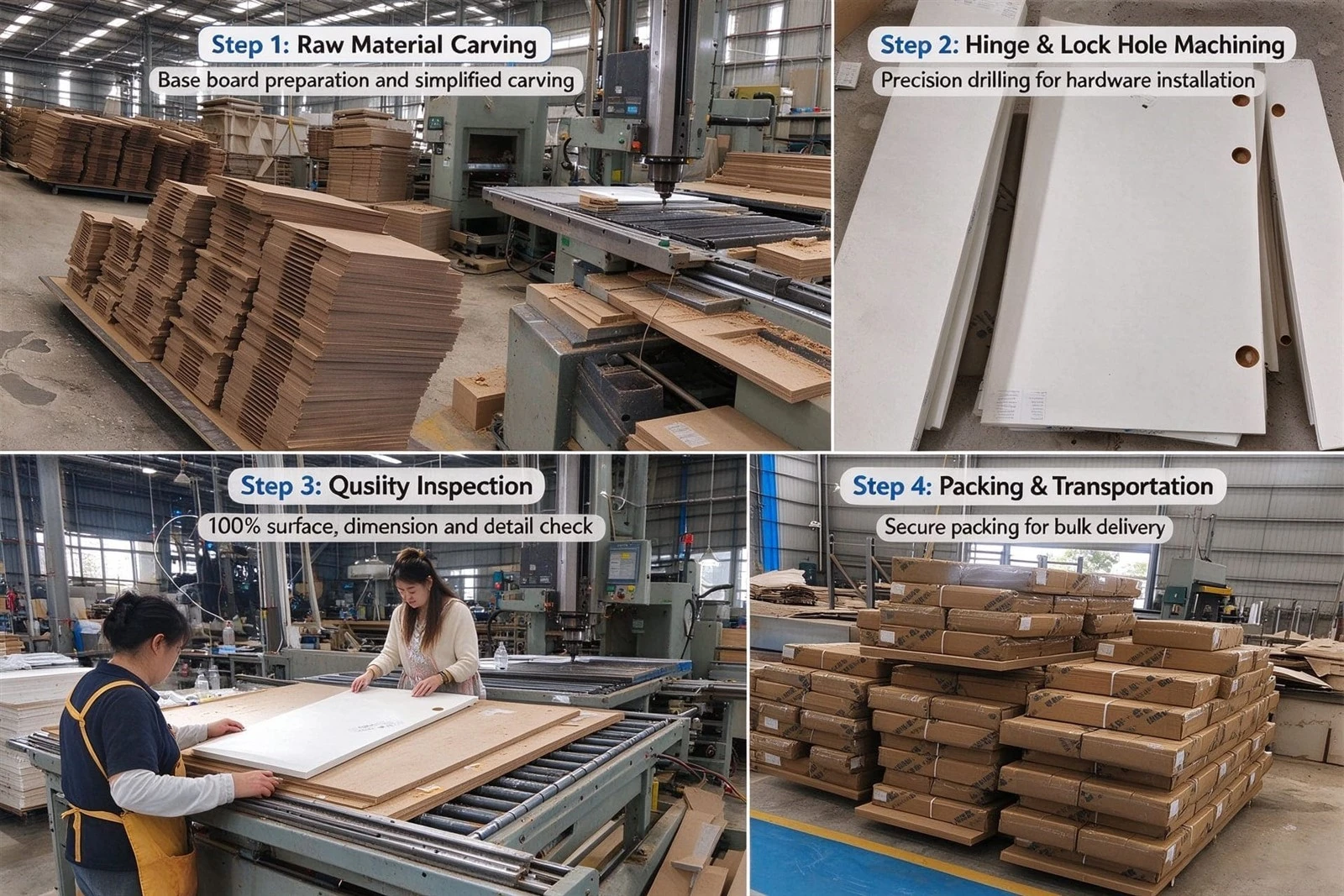
All PVC door quality inspections start with your approved master sample. Before you start checking any finished doors, confirm the factory has the signed physical sample, production drawing, colour reference, and agreed tolerance sheet on hand. Digital photos on a phone screen are never enough for colour and grain matching.
Agree on sampling rules with your supplier ahead of time. Most importers follow AQL standards for cabinet components: sample randomly from stacked finished goods, not only the top, cleanest pieces set aside for visitors. Inspect under neutral 6500K daylight lighting, at a 1-metre viewing distance, at a 45-degree angle - this is the standard viewing condition to spot scratches, gloss variation and faint colour shifts that disappear under warm factory overhead lights.
Step 1: Dimensional & Flatness Verification
Wrong dimensions are the most expensive defect for cabinet doors. Even a 1mm deviation in height, width, or diagonal will stop doors from fitting cabinet frames smoothly on site. Use a steel tape and digital caliper for all readings, and a straight edge plus feeler gauge to test flatness.
Check every door for:
- Exact height, width, and thickness against drawing
- Diagonal measurement to confirm the door is square
- Flatness: no bow, cup or twist. Run a straight ruler across the raised panel face and along edges
- Groove depth and profile shape: confirm CNC routing matches the sample; shallow grooves or uneven routing will cause poor PVC film wrapping.

Raised panel mouldings are easy to under-cut during batch production. If the profile is not routed deep enough, the PVC film will stretch too thin on corners and lift quickly after installation.
Step 2: Visual Surface Inspection for PVC Surface Defects
The surface inspection should cover the flat surfaces as well as all formed grooves, corners, and raised edges - these areas are the high-risk zones for PVC film problems. The inspection should be carried out in two stages: first, a visual inspection at a distance of 1 meter, and then a detailed close-up inspection of all the recessed areas of the profiles.
For doors with the following common PVC surface defects, they should be rejected or marked:
- Minor scratches, grit marks, dust spots embedded under the PVC film
- Orange peel phenomenon, uneven gloss or dull areas on the high-gloss surface
- Pinholes, bubbles, or water bubbles between the film and the MDF substrate
- Texture misalignment: horizontal arrangement of wood grain patterns or inconsistent patterns between different door panels
- Stains, ink marks, and fingerprint marks left after pressing

Use clean cotton gloves to gently wipe the surface of the profiles. It is difficult to detect rough areas, film edges that are lifted, or tiny wrinkles in the grooves with the naked eye. Pay special attention to the inner corners of the raised decorative strips, as the vacuum pressure often cannot fully press the film in place.
Step 3: PVC Film Edge & Groove Adhesion Check
This is the single most important test unique to raised panel thermofoil doors, and it is often skipped by general QC teams. Flat PVC doors only require edge banding checks, but raised panels rely on continuous vacuum wrapping deep into carved grooves.
Look for film bridging, where the PVC stretches across the top of a groove instead of sitting tight against the routed base. Even if it looks fine at inspection, bridged film will peel when exposed to kitchen heat and humidity. Check every inside corner for micro-lifting, where the foil starts to separate from the MDF.
You can perform a gentle tape pull test on a small, non-visible back corner with the factory's agreement. Apply firm masking tape, pull steadily. If the PVC film lifts away cleanly from the substrate, the pressing temperature or adhesive formula is out of spec, and the whole batch needs review. Do not test on visible front surfaces.
Step 4: Colour, Gloss & Texture Consistency
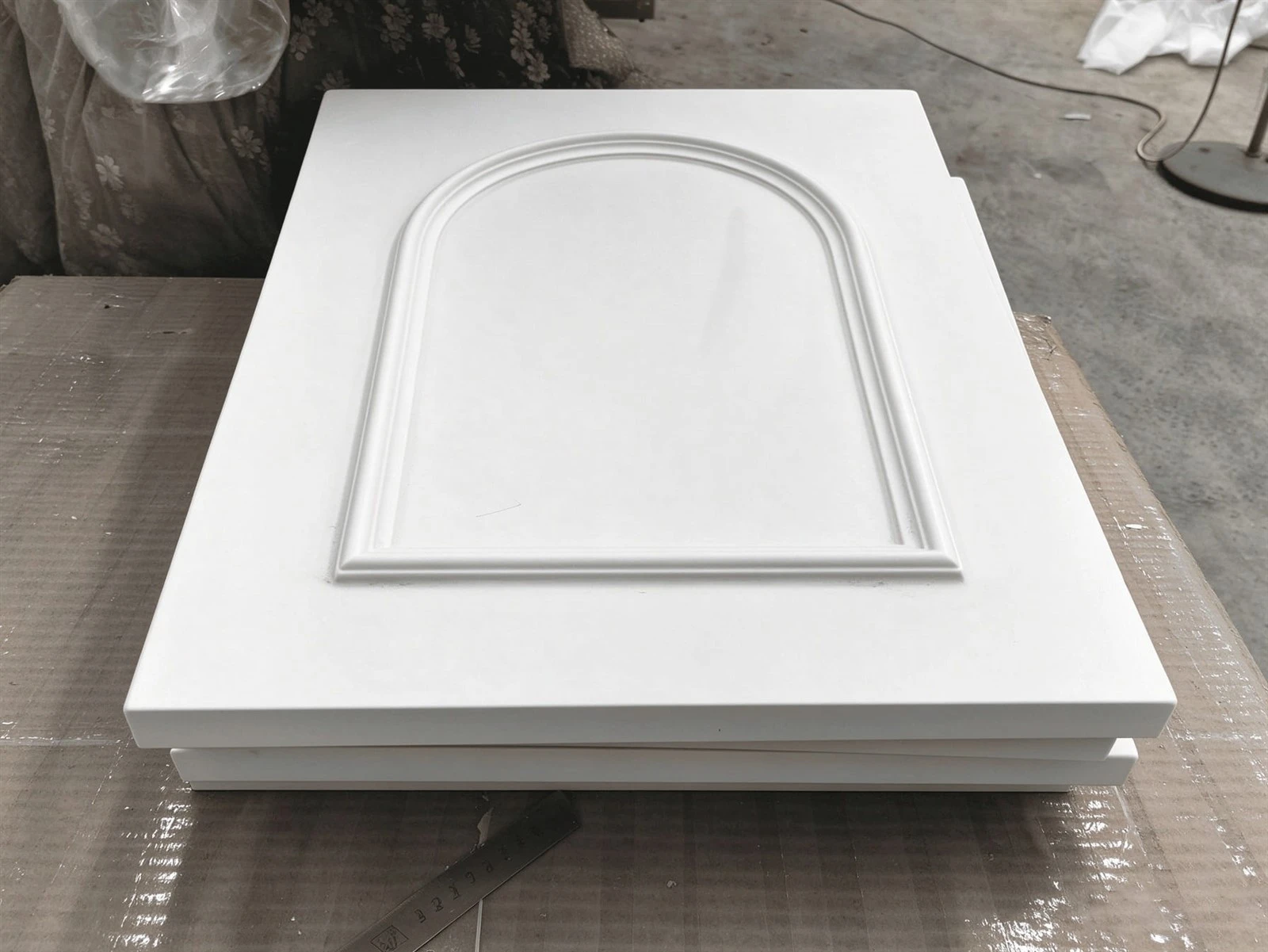
Colour mismatch is one of the top buyer complaints for PVC raised panel doors. It is not enough that a single door matches the sample; every door in the same cabinet run must match each other. Stack 5–10 doors side by side at the same viewing angle under standard daylight light.
Check three things together: colour tone, gloss level, and embossed texture. Two doors can look the same colour separately but fail when placed together because one is matte and one is slightly satin, or the wood grain emboss depth differs. For high-end projects, you can use a colour meter to record Delta E values, agreed between you and the factory before production.

Watch for batch drift: if the factory changes PVC film rolls mid-run, colour shift often appears. Inspectors should pull doors from different production stacks, not just one pallet.
Step 5: Hardware Hole Position & Pre-Drilling Check
If your order includes hinge holes, handle holes, or shelf pin holes, verify hole position, depth, and diameter against the drawing. Mis-drilled holes on raised panel doors cannot be easily fixed, because the moulded profile leaves limited room for re-drilling.
Check that drilling does not crack the MDF or tear the surrounding PVC film. Hole edges should be clean, with no chipping and no lifted foil around the cut. Confirm handed doors (left/right opening) are labelled correctly and sorted separately, especially for large mixed orders.

Step 6: Flatness & Environmental Stability Spot Check
PVC raised panel doors can appear flat at the factory, then warp after packing if the MDF core moisture content is unstable. If you have the time, pull a small sample and leave it laid flat for 24 hours inside the factory workshop before final sign-off. Doors that develop cup or bow overnight will almost certainly warp inside sealed shipping containers.
Avoid accepting doors that are stacked unevenly or leaning on edges for long periods before packing. Improper stacking can temporarily bend the panel and hide permanent stability issues.
Step 7: Final Packaging & Marking Inspection Before Shipment
Even perfect doors can arrive damaged if packaging is poor. This final check is often overlooked in PVC door quality inspection.
Each door should be wrapped individually with protective PE foam or stretch film, with rigid cardboard corner guards fitted on all four corners. Stacked doors need separating cardboard sheets to stop PVC surfaces rubbing and scratching during transit. Outer cartons should have sufficient thickness, with shipping marks, PO number, item code, quantity, and fragile handling labels matching your packing list.
Confirm the packed quantity matches the commercial invoice and packing list. Check that mixed styles, sizes, and handed doors are correctly separated and labelled, so your warehouse can unload and sort without opening every carton.
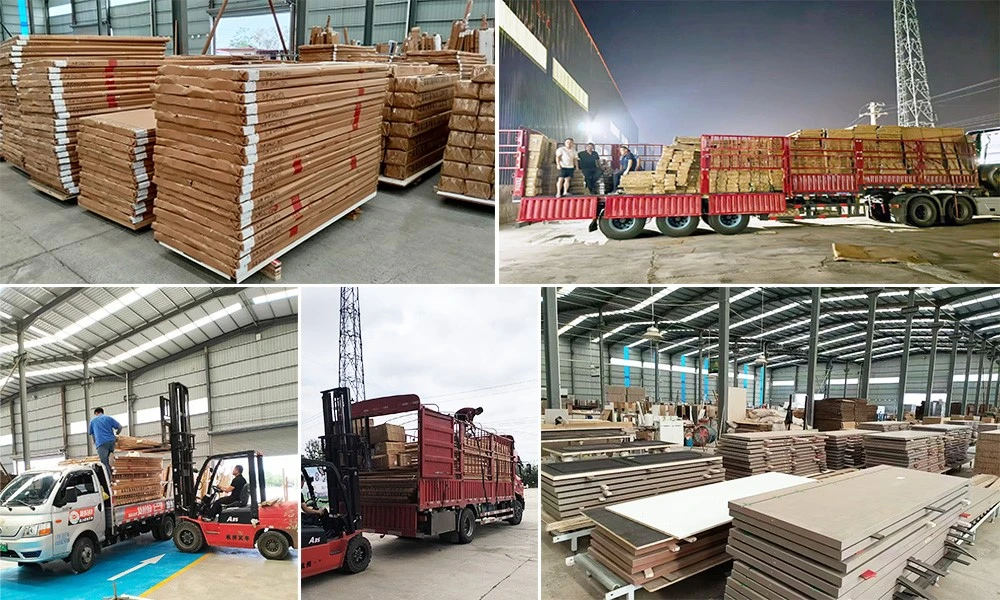
PVC raised panel doors deliver excellent value for cabinet projects, but their complex moulded profile creates unique QC risks that flat PVC doors do not share. Your pre-shipment PVC door quality inspection should move from dimension checks, surface defect review, groove and corner film adhesion, colour matching, hardware hole accuracy, flatness stability, and end with packaging verification.
The goal is simple: catch vacuum wrapping failures, colour drift, dimensional errors, and weak packaging while the goods are still at the factory, rather than after they land at your port. Working from an approved master sample, consistent lighting and agreed AQL rules will keep your rejection rate low and your supplier's production standard stable batch after batch.
DYWM (One May Dee Show Furniture Co., Ltd.) is a one-stop manufacturer for wooden doors, wall panels, and cabinets. We offer interior partition doors, wall cabinets, hidden doors, melamine doors, PVC doors, WPC doors, fluted wall panels, wardrobe and kitchen cabinets. Contact us to get well-matched products for your projects.
FAQ
Q: What is the most common defect on PVC raised panel doors?
A: PVC film lifting and bridging inside the moulded grooves and corners. This comes from incorrect vacuum pressure, insufficient heating, or poorly routed profiles during factory production. It often looks acceptable at first glance and fails months after installation.
Q: Can I rely only on photos for colour approval?
A: No. Screen colour shifts, lighting and camera white balance distort the finish. Always lock in a physical master sample before bulk production, and inspect finished goods side-by-side with this sample under standard daylight lighting.
Q: How do I test if the PVC film is bonded properly?
A: Use a gentle masking tape pull test only on hidden back corners. Do not aggressively peel the front decorative surface. Any clean separation of film from MDF means the lamination process is faulty.
Q: Are high-gloss PVC raised panels harder to inspect?
A: Yes. Gloss surfaces amplify scratches, dust specks and gloss variation. Inspect at a low 45-degree angle with strong daylight; minor marks invisible head-on become obvious when light runs across the surface.
One May Dee Show Furniture is a professional integrated source factory for wooden doors, wall panels, and cabinets. If you have needs for interior partition doors, overhead cabinets, hidden doors, interior melamine doors, PVC doors, WPC doors, grille wall panels, wardrobes, or kitchen cabinets, please contact us.
Address: Laomiao Village, Dacheng Town, Sanyuan County, Xianyang City, Shaanxi Province, China.
Tel.: +86-13735815925
E-mail: trade@omdoor.com; agent@omdoor.com