


Concealed Wood Door
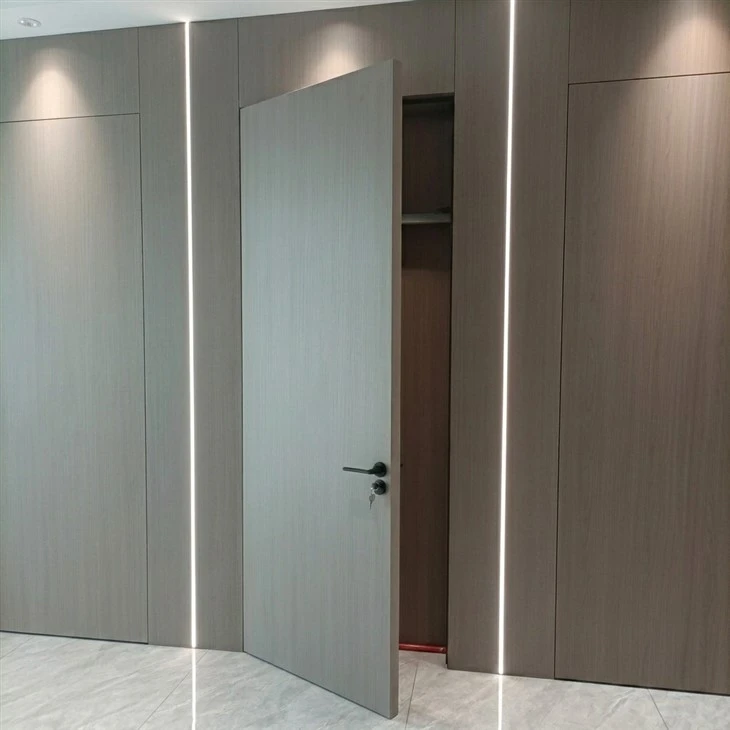
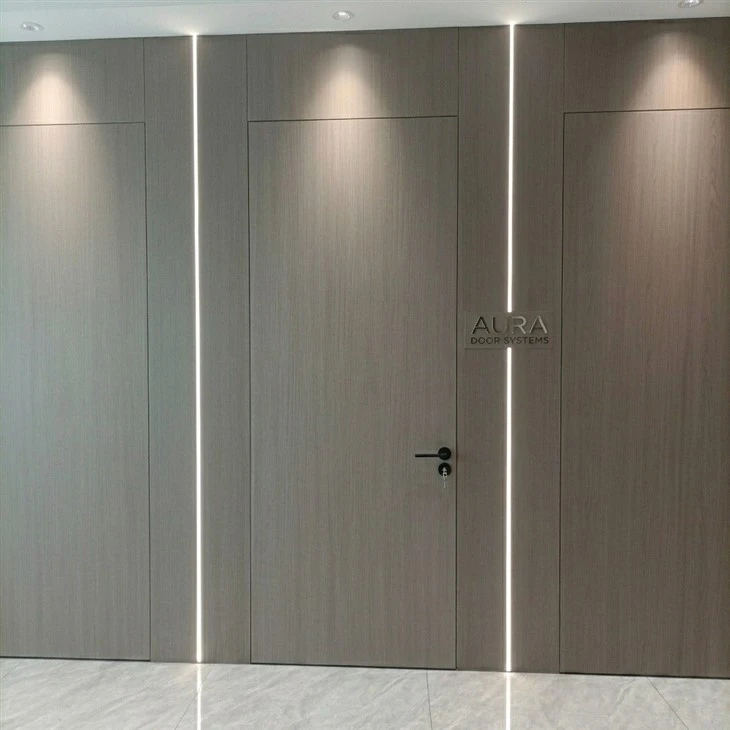
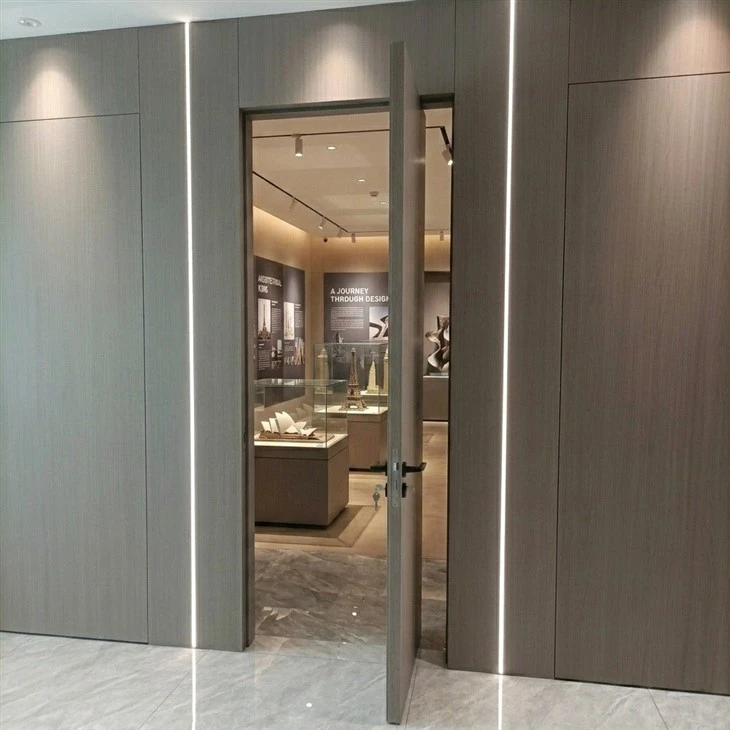
Feature: Invisible, Frame-less, Waterproof, Soundproof
Application: Living Room, Reception Room, Office Room
Opening Style: Push and Pull
Brand Name: DYWM
Place of Origin: China
Main Material: Composite Board + Solid Wood
MOQ: 10 Sets
Certificates: CE, COO
Warranty: 3 Years
Description
Technical Parameters
Introduction
Concealed wood doors refer to hidden or concealed wooden doors (often used in engineering contexts, and "invisible" in home decoration marketing). This means that when the door is closed, it is flush with the wall, and the hinges and frame are hidden, visually blending into the wall structure. These doors have extremely high requirements for the flatness, stability, and lightweight nature of the door leaf. Tubular particle board (also known as bridged particleboard), as its core filling material, has become a key solution for balancing aesthetics, functionality, and cost due to its unique physical structure and performance advantages.
Core Advantages: Why is it suitable for concealed wood doors?
1. Superior Lightweight Characteristics:
Concealed wood doors often require concealed hinges or pivots, making them sensitive to door leaf weight.
- Weight Reduction Effect: Compared to solid wood filling, tubular particle board can reduce the weight of the door leaf by up to 60%.
- Extended Lifespan: Significantly reduces the load on hinges and hardware, effectively preventing door sagging, deformation, or hardware loosening due to long-term gravity, ensuring the smoothness and durability of the concealed opening system.
2. Excellent Dimensional Stability:
- Resistant to Deformation: The arched structure evenly distributes external forces, resisting stress caused by temperature and humidity changes. Moisture content is typically controlled at 7%-8% (compliant with national standards), making it less prone to cracking and warping in dry or humid environments.
- High Flatness: For wooden doors aiming for an "invisible" effect, absolute flatness of the door surface is crucial. The high stability of the arched structural board ensures that finishes (such as paint, veneer, and lacquer) maintain their perfect condition over the long term, avoiding ripples or dents.
3. Good Sound Insulation and Thermal Insulation Performance:
- Acoustic Isolation: The air layer within the tubular cavity forms a natural sound wave damping zone, similar to the principle of a thermos. A 40mm thick perforated plywood board achieves approximately 28 decibels of sound insulation, meeting the basic privacy needs of bedrooms, studies, and other spaces.
- Thermal Insulation: The air layer effectively blocks heat transfer, improving indoor energy efficiency, making it especially suitable for modern residences with energy-saving requirements.
4. High Cost-Effectiveness and Environmental Potential
- Cost Advantage: High raw material utilization rate, lower cost than solid wood or high-density solid wood filling, making it a superior upgrade alternative to honeycomb cardboard.
- Environmentally Controllable: Although it is plywood, mainstream brands have achieved E0 or even ENF (formaldehyde-free) standards. When purchasing, check the test report to ensure that formaldehyde emissions meet standards and protect residential health.

Core Filling Material
I. What is Tubular Particle Board?
Tubular particle board is not a traditional solid wood board, but a type of engineered wood based on biomimetic principles. Its name comes from its internal structure, which resembles the arched openings of a bridge.
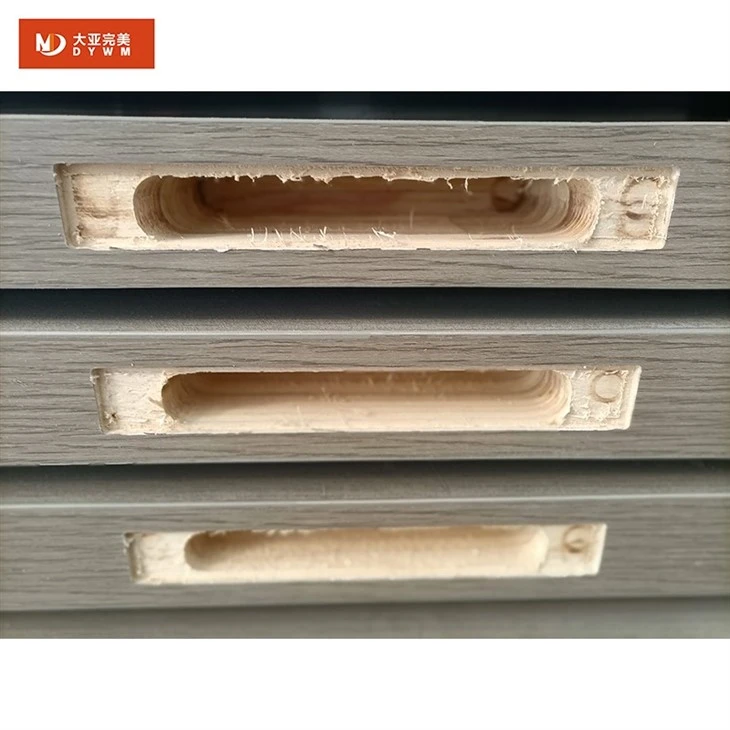
Structural Features: Made of wood particles or sawdust mixed with environmentally friendly glue, formed into a longitudinally arranged tubular (arched) hollow structure through a special extrusion process.
Appearance: Smooth surface with a regular array of holes distributed longitudinally along the direction of force on the door, forming a stable mechanical support system.
II. Advantages of Tubular Particle Board
The internal filling material of a concealed wood door panel directly determines its physical properties. Tubular particle board (also known as arched mechanical board) is an innovative board material originating from German technology. Its internal structure mimics the arched structure of a bridge, possessing unique mechanical advantages.
1. Excellent Sound Insulation Performance
The hollow, arched structure effectively blocks the propagation path of sound waves, forming a natural acoustic damping layer. Compared to traditional solid particleboard or honeycomb paper filling, perforated particleboard significantly reduces noise penetration, providing an excellent quiet environment for private spaces such as bedrooms and studies.
2. Balance of Lightweight and High Strength
Reduced Load: The perforated structure significantly reduces material usage, resulting in a substantial reduction in door weight (e.g., a standard-sized door can be controlled to around 28 kg). This reduces the burden on hinges and walls, extends the lifespan of hardware, and ensures smooth opening and closing without sagging.
Deformation Resistance: The arched structure has extremely high compressive strength, effectively resisting external impacts and internal stresses, preventing the door from bending or twisting due to temperature and humidity changes, ensuring long-term flatness.
3. Environmental Protection and Thermal Insulation
This structure reduces the amount of adhesive used, meeting the low formaldehyde emission standards of modern green building materials. Simultaneously, the air layer provides excellent thermal insulation properties, helping to maintain stable indoor temperatures.

Application
Our Products


Recommended Application Scenarios:
| Dimension | Performance Description | Suggestion |
|---|---|---|
| Sound Insulation Limit | Better than hollow core doors, but lower than solid wood doors with high filling rate or professional sound insulation doors | For recording studios and home theaters with extremely high silence requirements, it is recommended to use solid wood composite or dedicated sound insulation core materials |
| Moisture Resistance | Wood-based substrates are prone to swelling when exposed to water, and the risk is higher when the edge sealing is poor | Not recommended for high-humidity environments such as bathrooms and kitchens; if it must be used, six-sided waterproof edge sealing treatment is required |
| Longitudinal Strength | The longitudinal static bending strength of boards produced by extrusion method is relatively low | Rely on surface decorative panels (such as MDF, HPL) to provide overall rigidity, and avoid local heavy pressure impact |
| Nail Holding Power | The nail holding power of ordinary particle structure is weaker than that of solid wood | When installing locks and hinges, special extended screws or pre-embedded reinforcement blocks are required |
Purchase and Acceptance Guide:
To ensure the quality of concealed wooden doors, consumers should pay attention to the following points when purchasing:
- Inspect Core Material Samples: Reputable manufacturers should provide cross-sectional samples of the door core. Observe whether the arched structure is regular, tightly arranged, and free of breaks or voids.
- Confirm Environmental Rating: Request a test report issued by an authoritative institution. Prioritize products labeled "E0" or "ENF" to avoid formaldehyde pollution from inferior adhesives.
- Check Surface Finish: Concealed wooden doors emphasize visual uniformity. The surface finish should be free of bubbles, scratches, and color differences. Edge sealing must be tight to prevent moisture from penetrating the core material.
- Compare Filling Materials: Within the budget, the performance ranking is usually: Solid wood > Arched core board > Honeycomb cardboard > MDF. Arched core board offers the best balance between cost-effectiveness and performance.
One May Dee Show Furniture is a professional integrated source factory for wooden doors, wall panels, and cabinets. If you have needs for living room doors, floating cabinet, hidden doors, interior melamine doors, PVC doors, WPC doors, grille wall panels, wardrobes, or kitchen cabinets, please contact us.
Address: Laomiao Village, Dacheng Town, Sanyuan County, Xianyang City, Shaanxi Province, China.
Tel.: +86-13735815925
E-mail: trade@omdoor.com; agent@omdoor.com

Hot Tags: concealed wood door, China concealed wood door manufacturers, suppliers, factory, Flush to wall Door, Frameless Concealed Door, Hidden Bedroom Door, invisible door, Invisible Flush Wooden Doors, invisible wood door system
Product Attributes
|
Product Name |
Concealed Wood Door |
|
Finishing |
Pre-fininshed |
|
Application |
Living Room,Reception Room, Hotel Room, Bedroom, Villa |
|
Veneer |
Melamine Paper/PVC Film + MDF/HDF Board |
|
Skeleton |
LVL Board |
|
Core Filling |
Soundproof Timber, Solid Wood, Tubular Particle Board, Graphene Board |
|
Door Way Size |
2100x900mm |
|
Wall Thickness Range |
90~300mm |
|
Door Leaf Size |
2050x830x50mm,2050x830x55mm |
|
Colour |
Bionic Wood Grain, Solid Colour without Texture, Glossy or Customized |
|
Accessories |
Frame, Wall Panel, Lock Set, Invisible Hinge |
|
Frame Material |
Melamine/PVC + MDF + Solid Wood |
|
Wall Panel Material |
Melamine/PVC + Particle Board |
|
Package |
Soft Edge Protectors + Cushioning Foam + PE Bag + Carton+Pallet |
Previous
Door With Hidden Door HingesSend Inquiry


